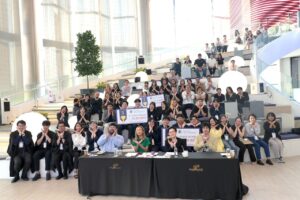
Young people from eight countries across East Asia gathered in Bangkok to participate in the Young Minds CAMP (YMC), organised by World Vision East Asia.
This annual event aims to create a space for youth to learn and develop essential skills such as leadership, communication, and advocacy on issues related to child rights and community development. This year, the main theme of the camp was migration – a topic that significantly affects the lives of many children and young people in our region.
More than 20 youth participants joined the platform, representing Cambodia, Laos, Mongolia, Myanmar, Vietnam, Indonesia, the Philippines, and Thailand. Two youth leaders from World Vision Thailand participated: Satsawat, also known as Ming, from Surin Province, and Sirima, also known as Paeng, from Mae Hong Son Province.
Satsawat, also known as Ming, from Surin Province . Sirima, also known as Paeng, from Mae Hong Son Province .
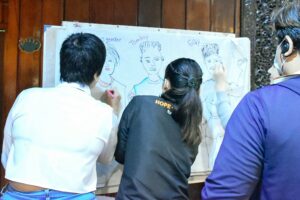
The camp began with workshops designed to educate participants about migration and its impacts. Youth from different countries had the opportunity to get to know one another, share experiences, and present policy recommendations from their own perspectives.
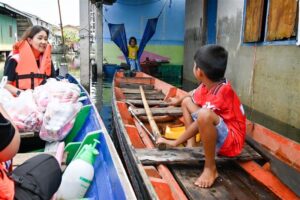
A key highlight of the camp was the open forum, where youth shared their views on migration and the challenges faced by children affected by it in their respective countries. Many reflected on the difficulties children and young people encounter, such as a lack of access to education, the absence of legal documentation, limited access to rights and public services, and discrimination in the new communities they move to.
Ming and Paeng also shared their experiences from their local areas and proposed ways in which youth can contribute, such as organising awareness activities on child rights, creating safe spaces in communities, and advocating for youth voices to be heard at the policy level.
Paeng expressed her thoughts on migration: “Migration can happen for many reasons – natural disasters like floods or family issues such as parental separation. These situations can leave children feeling anxious and isolated. I want adults to consider the emotional impact on children who have to move. It can cause stress and emotional instability. When it comes to children’s rights, I want children’s voices to be heard as much as possible.”
Ming added with determination: “Helping migrant children is not just about providing general support but ensuring they can truly access the rights they deserve. Today, I have learned what those rights are and how we can ensure that all children, especially those without documentation or ID cards, receive proper care and access to basic services like everyone else.”
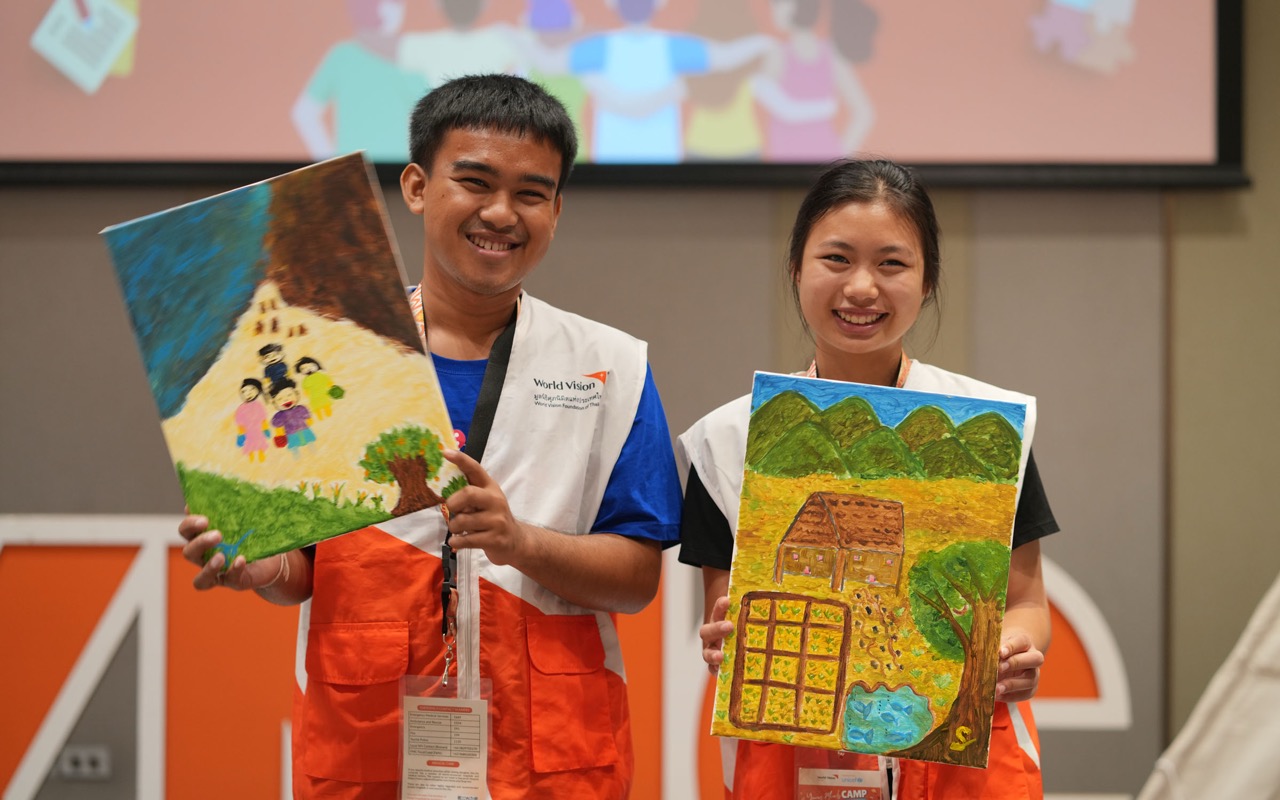
This platform not only allowed young people to showcase their potential but also reinforced the message that youth voices matter and can be a powerful force for social change. This was especially evident during the project proposal presentation session, where participants proposed initiatives for change, sharing their insights, emotions, and experiences related to migration.
Representatives from international NGOs (iNGOs) who attended the session recognised the youth’s commitment and their ability to analyse complex issues. It became clear that young people are not merely affected by these challenges – they are key agents of change and should be supported to participate in policy-making processes.
Creating spaces where youth can speak, propose ideas, and collaborate is a testament to the belief that youth voices are a genuine force for sustainable social transformation.