Migrants workers are not merely ‘substitute labourers,’ but capable individuals with potential and dreams just like us. They are the silent force propelling Thailand’s economy.
According to Foreign Workers Administration Office, Department of Employment, as of April 2025, Thailand had over 4.4 million legally registered migrant workers, primarily from Myanmar, Cambodia, Vietnam, and Laos. Including an estimated 1–2 million unregistered workers, migrants make up around 14–15% of the country’s total workforce. They are employed in key economic sectors such as construction, food processing, agriculture, and fisheries—all pillars of the Thai economy.
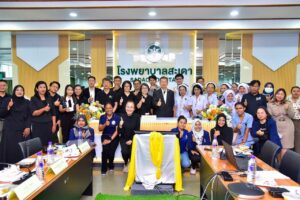
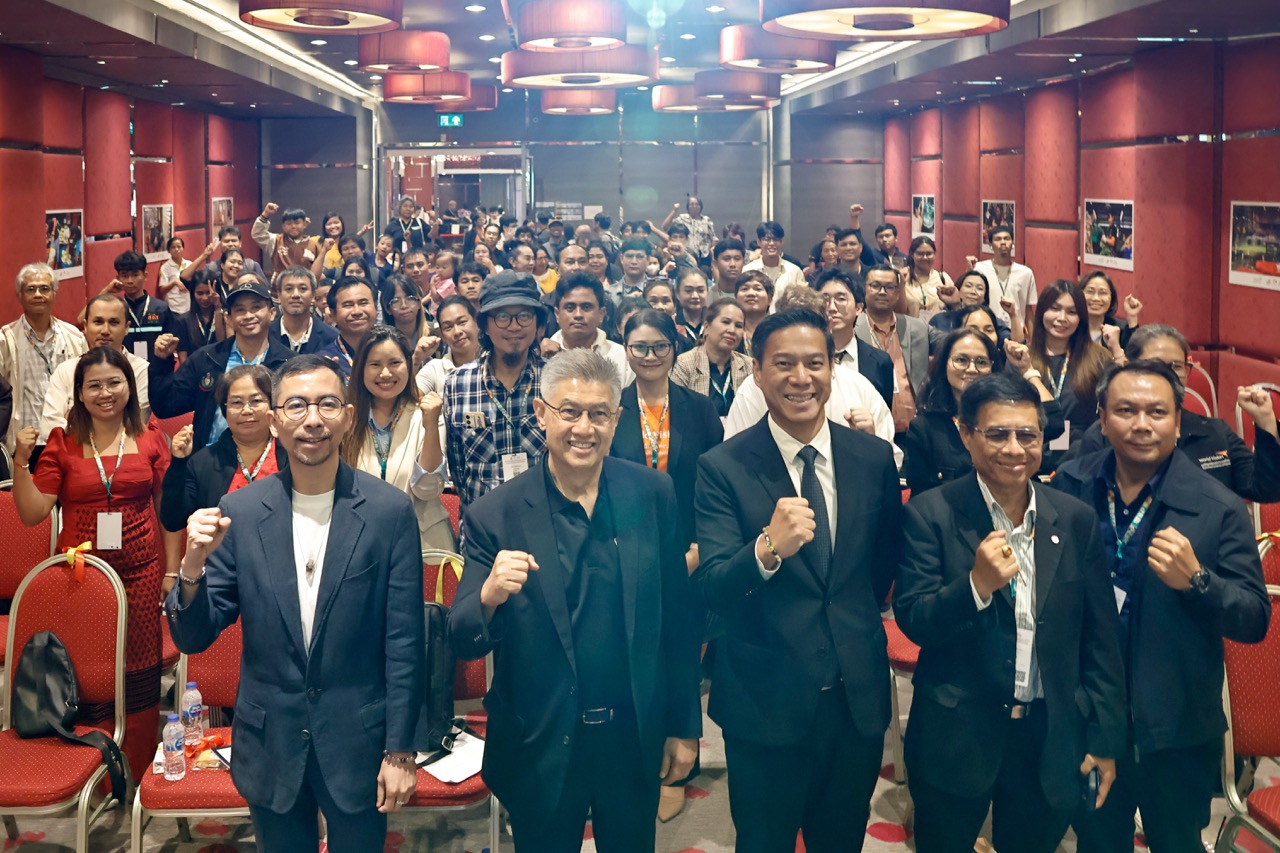
To deepen understanding of this issue, World Vision Foundation of Thailand, in collaboration with Thai Health Promotion Foundation (ThaiHealth) and partner networks, hosted a historic forum titled ‘Voice of the Voiceless: Uniting for Health Equity, Moving Forward Together’ on June 19, 2025. The event provided a platform for migrant workers to share their experiences and challenges working in Thailand and allowed participants to exchange perspectives and ideas for collaborative action through a sub-forum titled: ‘Who Would Do the Jobs If Not Migrants?’
Let’s hear the first voice from Meaw, a 32-year-old woman from Myanmar. She spoke in a calm but meaningful tone: “I did not choose my job. I did not have many options. Just having honest work is enough.” Over the years, she has had numerous jobs, working in noodle shops, Thai dessert stalls, grilled meatball stands, coffee shops, and hotels. Her sole purpose is to earn money to support her family back home.
“I never intended to take jobs away from Thai people,” she said firmly. “I just want to work to support my family. These are hard, time-consuming jobs that most people would not want to do, but we can. I am not asking for much. Please just understand that I am also a fellow human being. I just want basic rights.” Her words were both a reflection and a plea, shared before hundreds in the conference room.
The second voice came from Wit, a Cambodian man who has worked as a garbage collector at a market since 2011. “I came to Thailand because there were no jobs at home. The work is exhausting, but I still want to stay, not because I am forced to, but because people here give me opportunities, stability, and a sense of belonging.” He never considered working elsewhere because he feels safe and cared for here, like part of a family.
Wit is no different from anyone else working to support themselves and their families.
“As a migrant worker, I want to say that the jobs we do—many people may not want them—but this is our life. I thank everyone who sees us with understanding and gives me the chance to be here. I am a father, a son, a person who works hard for his family, just like everyone else.”
Chintana Thamsuwan, Migrant Health Grants Portfolio Manager, World Vision Thailand, emphasised: “Migrant workers are a vital force driving Thailand’s economy. They do extremely difficult, dangerous, and labour-intensive jobs, often in unsanitary conditions. Yet they remain a vulnerable group that may not have access to essential services.”
In this sub-forum, several experts shared key insights. Asst. Prof. Adisorn Juntrasook, Ph D from Thammasat University noted: “We must raise our voices to foster understanding and listening. The world is not always black and white—grey areas are crucial for learning and growth. When we see others as equals, we can build a better society together.”
Mr Kanvee Suebsaeng, Member of Parliament (Party List) and Vice Chair of the Committee on Law, Justice, and Human Rights, added: “We need to address structural issues systemically. Start with policy reform, build the necessary frameworks, and the laws will follow.”
Mr Surasak Thanaisawanayangkoon from Health Systems Research Institute (HSRI), Mr Adisorn Kerdmongkol from Migrant Working Group (MWG), and Mr Sathian Thanprom from Foundation for Action on Inclusion Rights discussed building inclusive health security systems, the realities of healthcare costs for migrants, and the current situation of migrant populations in Thai society.
Harley Hamilton, Grants Acquisition Management Director from World Vision Thailand, concluded: “I hope today’s discussions will be the beginning of collaboration and lead to fairer policy changes.”
A truth often overlooked is that respecting human rights, including those of migrants, is not about charity. It is an ethical and legal obligation for all sectors to treat everyone fairly, respect human dignity, and avoid discrimination.
Human rights are not a barrier to economic growth; they are the foundation of sustainable development. A country that ensures justice for all groups fosters peace, stability, and fairness—key factors in attracting investment, building global trust, and reducing long-term conflict.
Therefore, the question ‘Who Would Do the Jobs If Not Migrants?’ is not just an economic one. It invites us to reflect: Are we ready to embrace diversity and treat one another with respect and fairness? Because ultimately, true national development begins with cultivating a mindset that values the equal humanity of all, no matter where they come from.