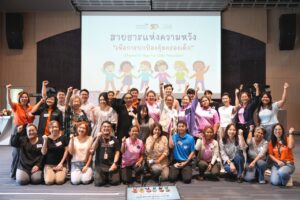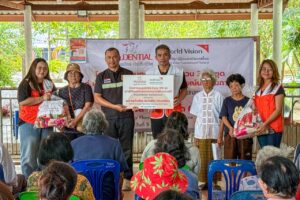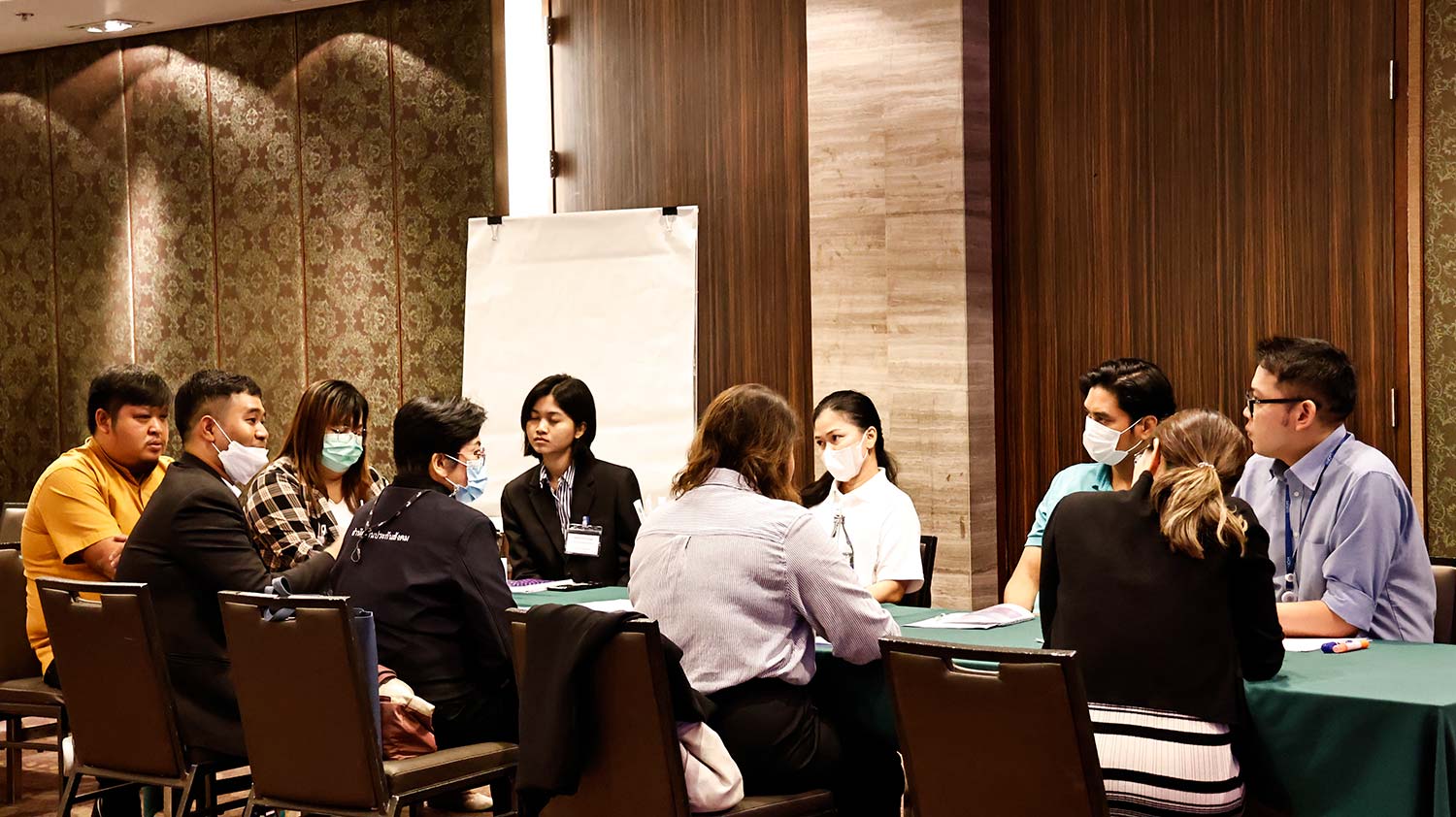
World Vision Foundation of Thailand, in collaboration with the International Organization for Migration (IOM) and with support from the Government of Japan under the “Humanitarian-Development-Peace Nexus (HDPN) Response to the Needs of Vulnerable Migrants in Thailand” project, organized a workshop to present survey findings (data feedback). The goal was to prepare for current challenges faced by vulnerable migrants and to collaboratively map service providers for migrant workers.
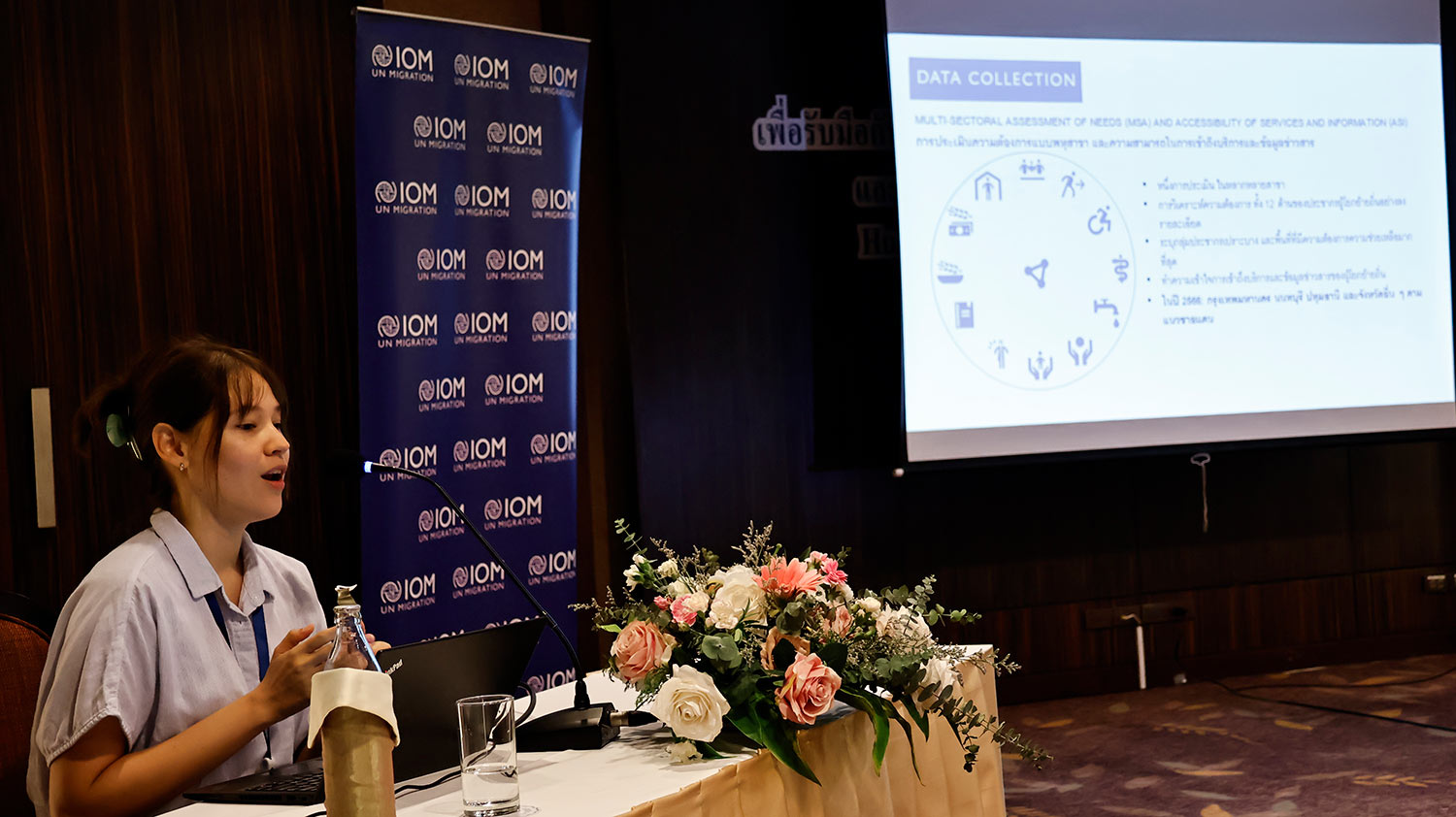
The morning session featured a presentation on the survey results titled Multi-Sectoral Needs Assessment and Accessibility to Services and Information. Data was collected across Bangkok, Pathum Thani, and Nonthaburi to provide a detailed analysis of 12 key needs of the migrant population, including migration, identification documents, education, employment, food security and livelihoods, protection, health services, and housing.
Khun Chatra BAUDE, a representative from IOM, revealed that the survey respondents represented diverse occupations, with the top three being trade, services, and food production. It was found that 90% of their primary income comes from work, while 13% of respondents earn an average income below the minimum wage.
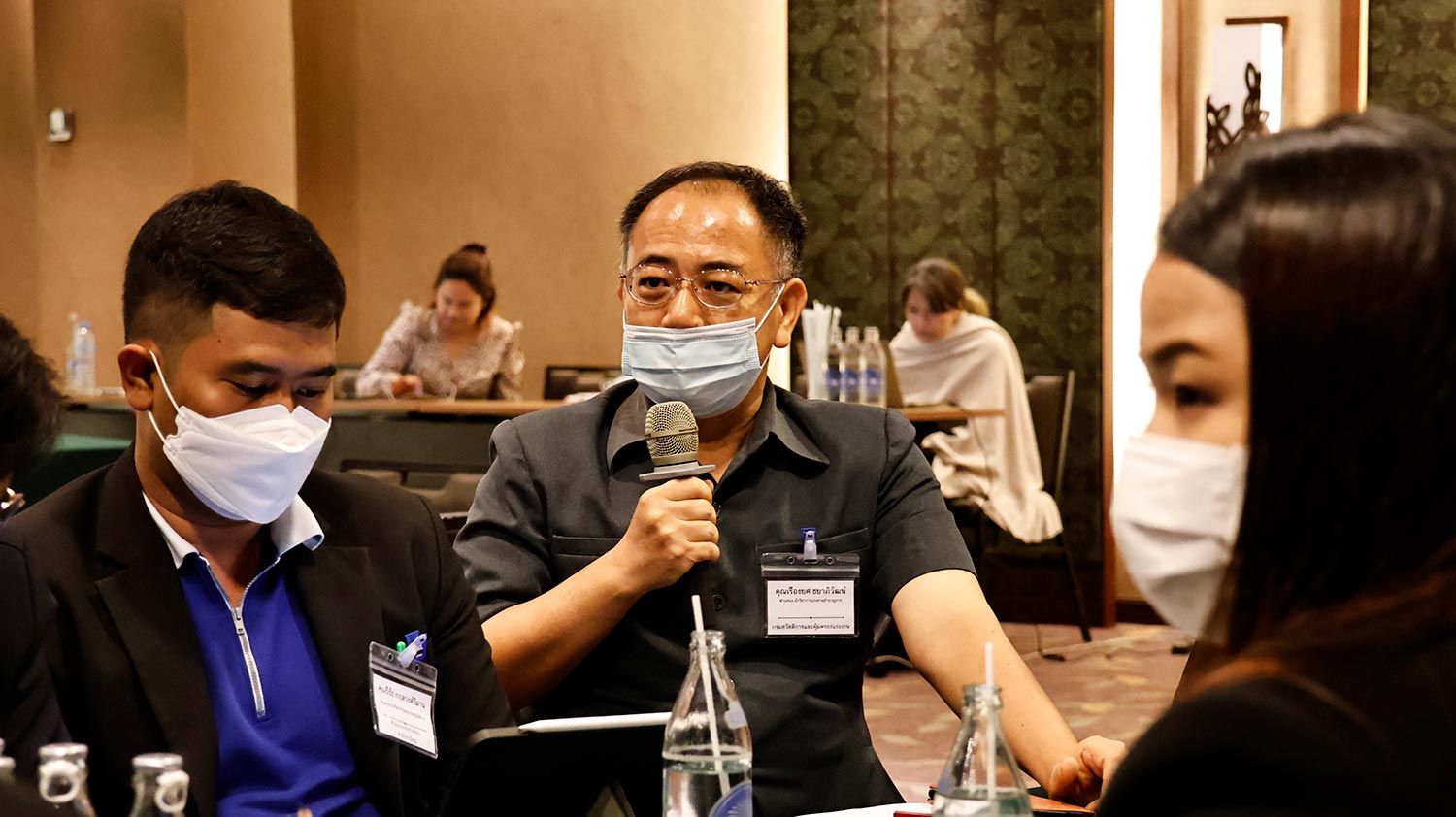
Khun Ruengyot Chayapiwat, Senior Labor Specialist from the Department of Labour Protection and Welfare, discussed the procedures followed when migrant workers do not receive the prescribed wages: “Initially, we facilitate a tripartite discussion between government officials, employers, and employees to reach a mutual understanding based on labor relations principles. However, if an employee wishes to file a complaint and the employer fails to comply after our recommendation, the case enters a legal process where the employer is ordered to pay according to the law.”
Another critical and long-standing issue is access to health services. Although the survey found that 69% have access to formal health services, such as hospitals and public health units, the primary barriers to access remain language, costs, and cultural differences.
Regarding health insurance for migrant workers, the survey identified three reasons why migrants find health insurance difficult: lack of knowledge about covered services, uncertainty about which medical facilities accept the insurance, and the cost. Consequently, 49% of migrant workers have no health insurance.
Echoing these findings, Khun Pruksachon Laosakulsiri, a Medical Social Worker at Nopparat Rajathanee Hospital, shared: “The most common issue we encounter is undocumented migrant workers without identification. When they fall ill and seek treatment, they have no medical rights or health insurance. This leads to two problems: they can only pay partially or not at all. We then have to provide social welfare for the medical costs, coordinate with relevant agencies for assistance, or notify the police for further legal action. I would like to advocate for a policy requiring migrant workers to have health insurance before entering Thailand—whether at immigration checkpoints or airports. This would be a huge help because we never know when illness will strike.”
Furthermore, the survey on livelihood risks found that for adults, substance abuse is a significant risk, affecting up to 65%. However, a concerning finding regarding children in the area is that domestic violence ranks among the top three risks for both girls and boys.
When faced with risks to physical, mental, and living conditions, who can these migrants rely on? The survey found that 43% of respondents were unaware of the various services available to them, including mental health services, shelters, legal aid, and interpretation services.
These survey results served as the primary basis for finding solutions through a brainstorming process involving three groups: Bangkok, Pathum Thani, and Nonthaburi. Together, they worked to identify ways to bridge gaps and address the challenges faced by migrants.
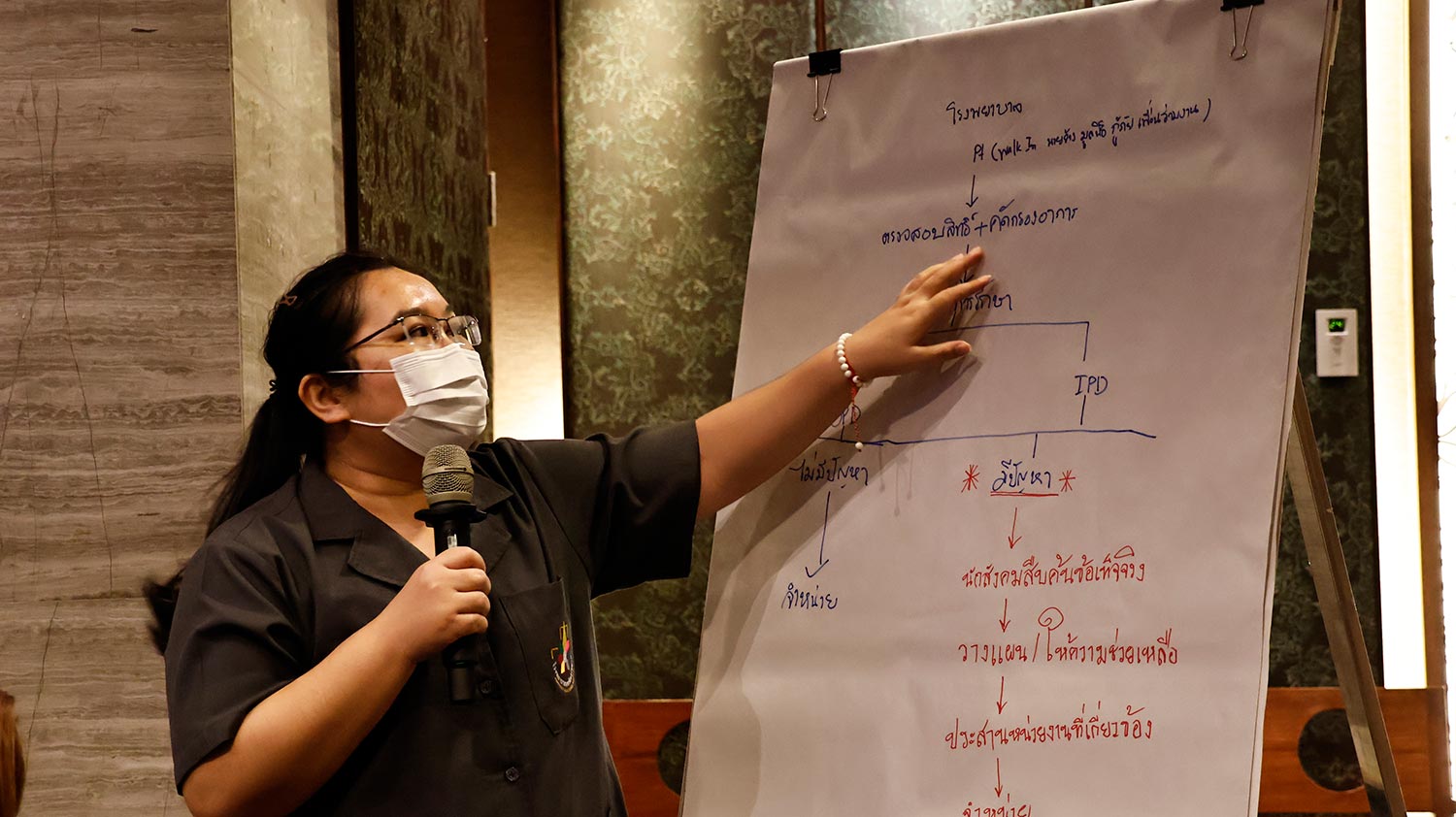
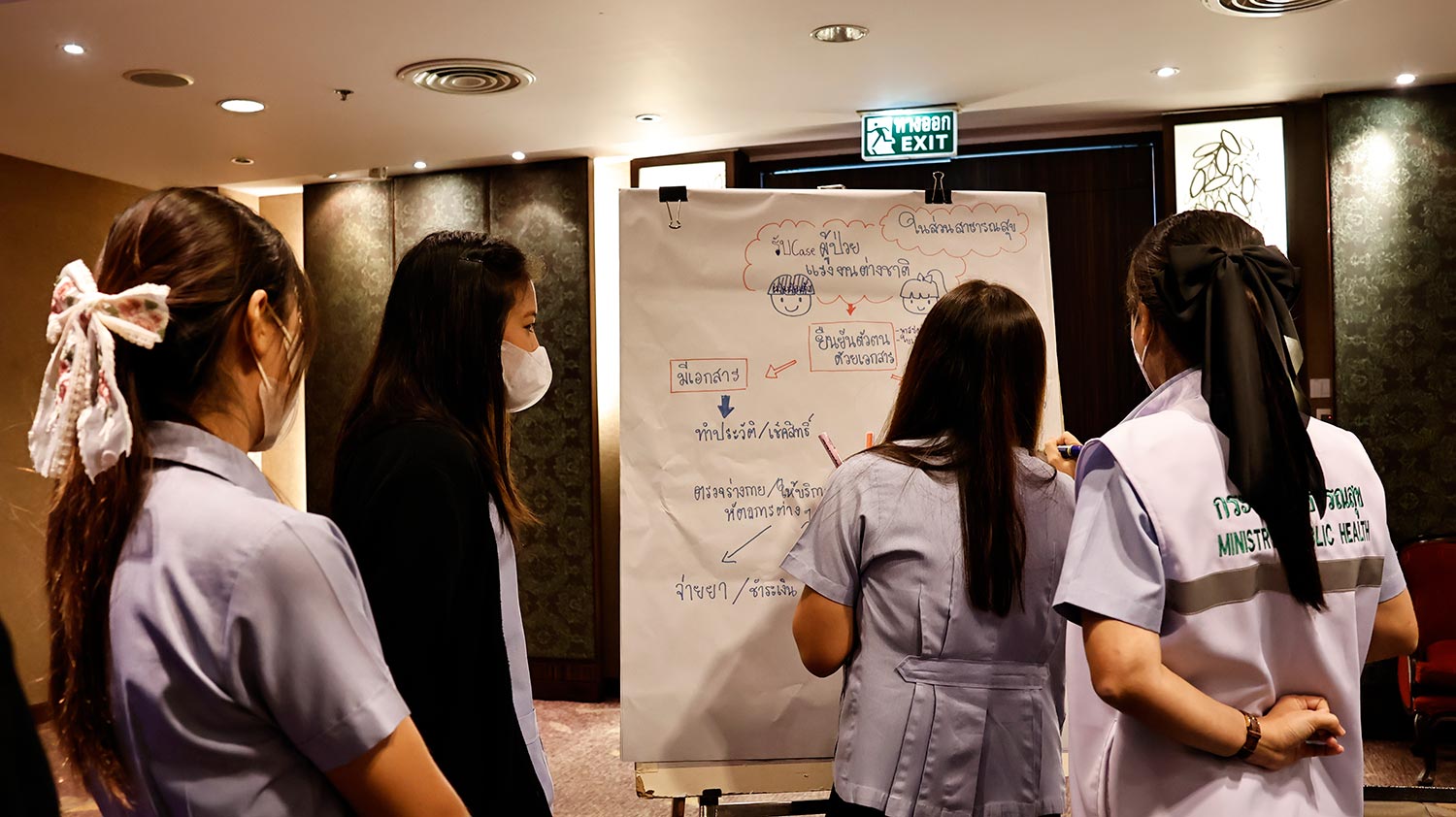
The afternoon session intensified with the challenge of mapping relevant agencies and service channels in each area. Khun Papop Siamhan, a project consultant, led representatives from health and labor rights agencies in brainstorming and analyzing the assistance processes within their respective organizations. This collaborative effort to create service maps and channels will lead to the development of a comprehensive service point map for migrant workers in the future. This service mapping acts as a guide to support and stand by the migrant population, serving as a compass to navigate solutions and fix the gaps of the past.
This meeting reflects the commitment of all sectors to resolve issues and bridge previous gaps to meet the needs and ensure access to services and benefits that migrant workers deserve. Reducing inequality and violence is not the duty of any single agency, but the responsibility of everyone as fellow human beings.