In a rapidly changing world, vocational skills, life skills, and hands-on work experience have become essential in helping young people adapt, learn, and move confidently toward the future. Providing children and young people with opportunities to learn by doing is therefore a key approach to sustainable human development
According to the Equitable Education Fund (EEF), 64.7% of young people and working-age people aged 15–64 have below-standard literacy skills, 74.1% have below-standard digital skills, and 30.3% have social and emotional skills below the standard. In addition, 18.7% lack basic proficiency in all three areas. These gaps directly affect their ability to learn, earn a living, and adapt to the 21st-century world of work.
These figures show that classroom education alone may no longer be enough. Young people need opportunities to develop skills through hands-on experience, including problem-solving, collaboration, communication, management, and creating value for themselves and their communities.
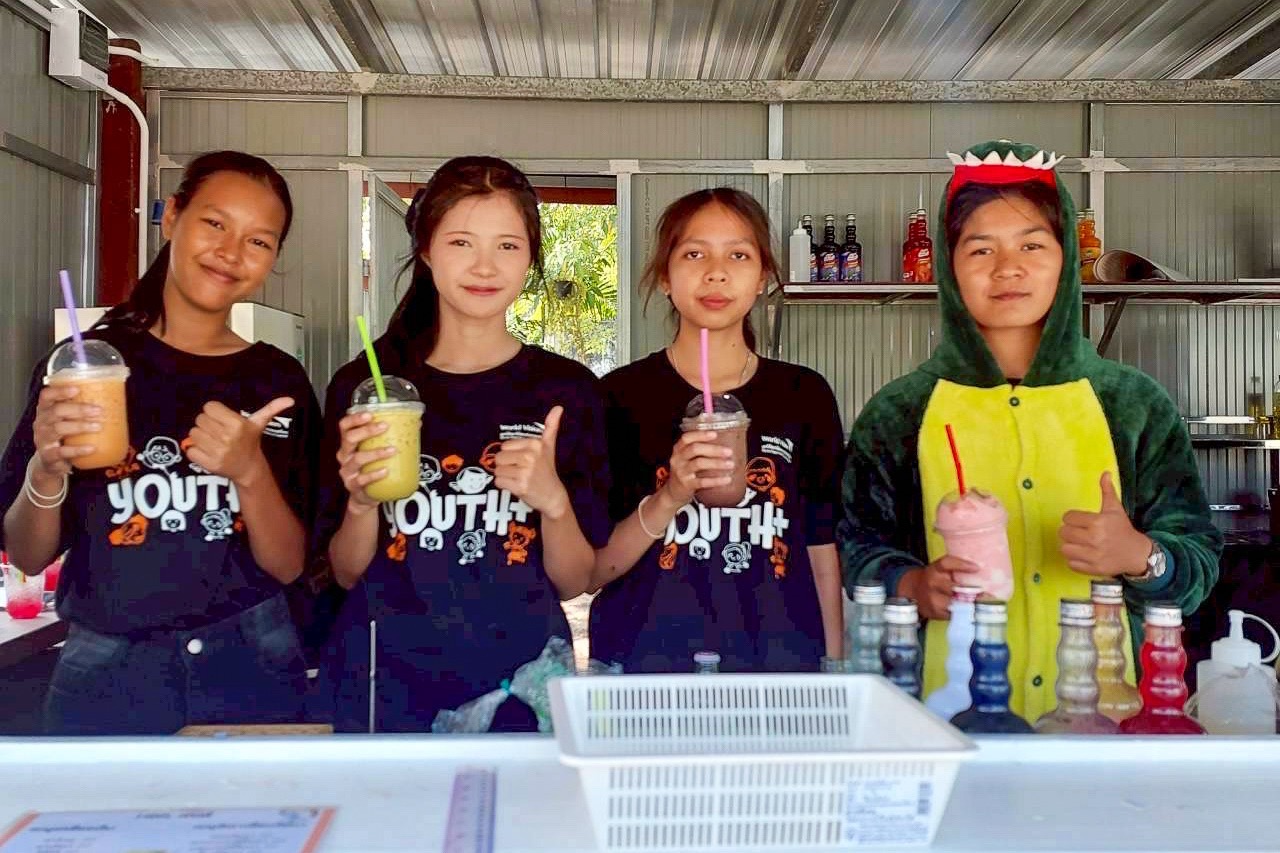
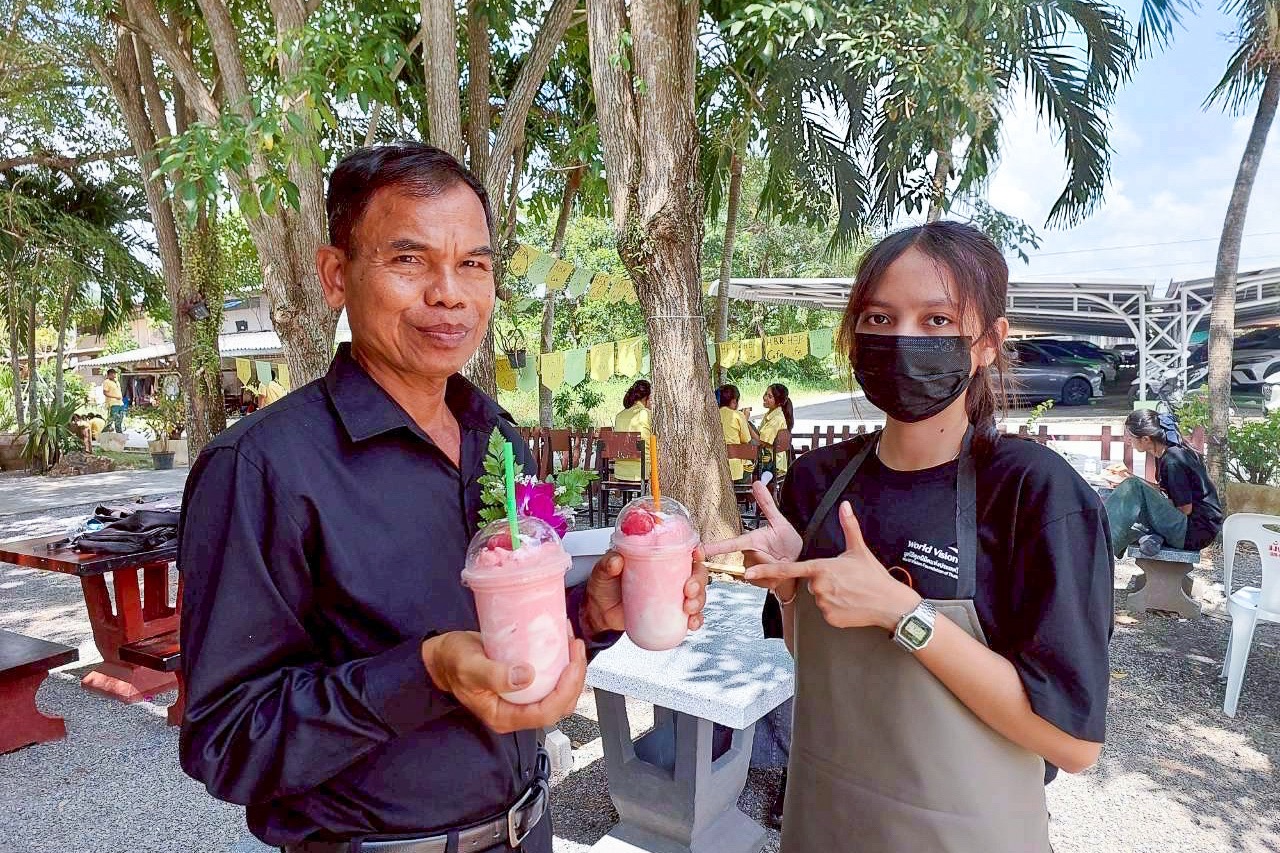
As part of its mission to advance education and life skills, World Vision Foundation of Thailand promotes learning that connects education, life skills, and livelihoods. This approach helps children and young people discover their potential and build secure futures. One initiative that puts this approach into practice is a short-term vocational training program for young people, implemented through HBR Café in the Hua Sai Area Development Program in Nakhon Si Thammarat Province and Phiangluang 16 Coffee in the Tub Tao Area Development Program in Chiang Rai Province.
Building on training in beverage preparation and baking conducted in partnership with local schools, World Vision Foundation of Thailand has given young people opportunities to develop vocational, management, customer service, and teamwork skills through ‘experiential learning’—an approach centered on hands-on practice and real-world experience.
Investing in Skills Begins with Experiential Learning
HBR Café grew out of a youth capacity-building initiative launched in 2024 by World Vision Foundation of Thailand in partnership with local schools and teachers responsible for guidance and career education.
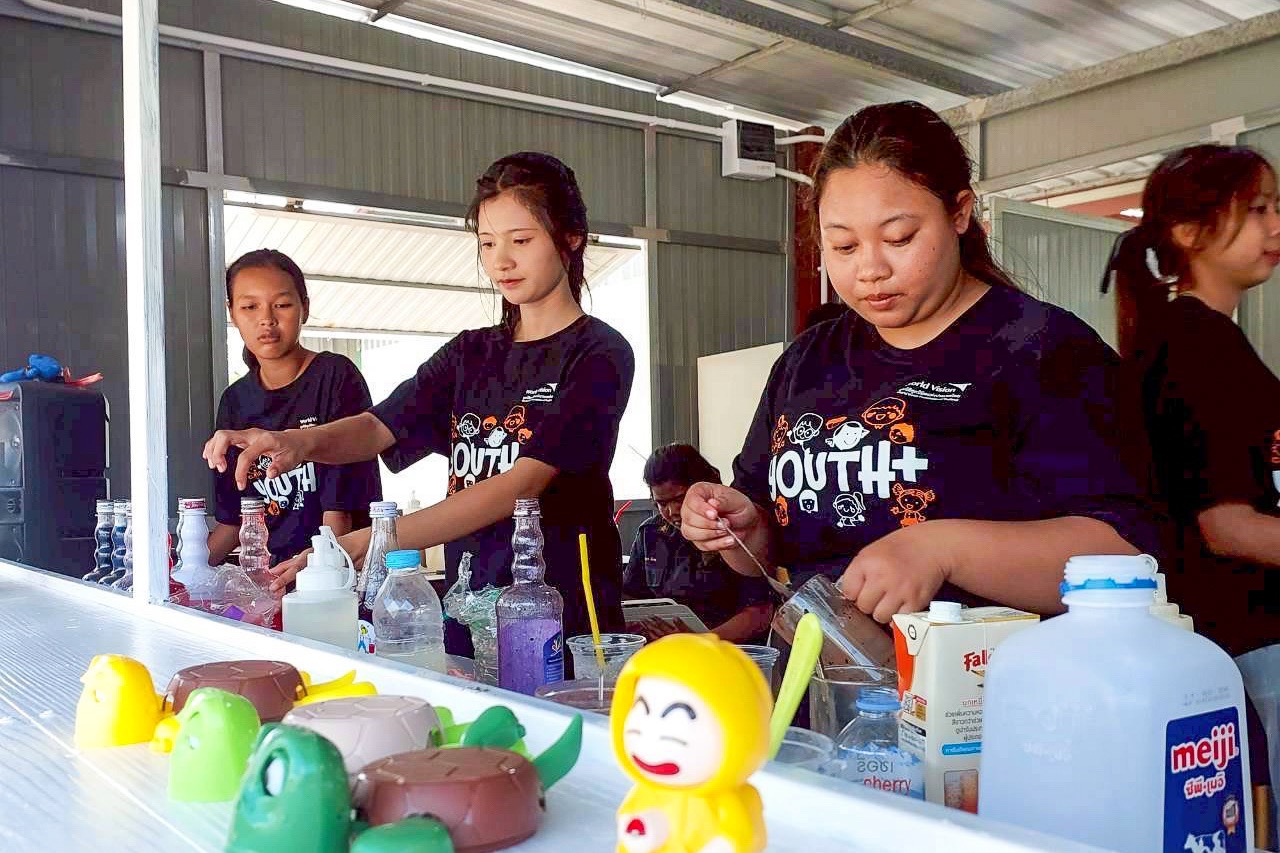
The beverage and bakery training combines theory with hands-on practice through activities that develop critical thinking, ingredient management, cost calculation, customer service, and teamwork—all essential skills for future employment.
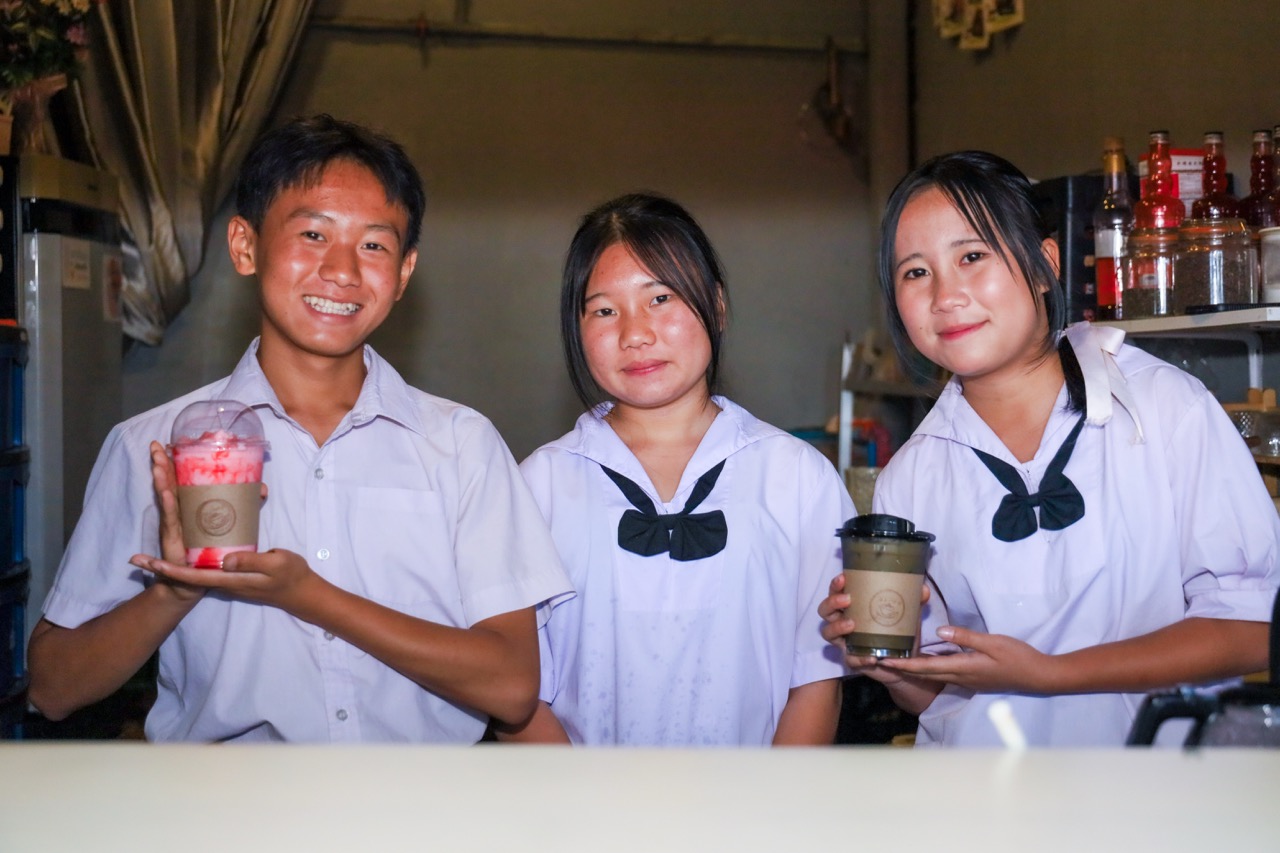
Over more than two years, participants have gradually progressed from learners to hands-on practitioners. They began by preparing basic menu items before moving on to creating new offerings and taking orders for cookies and baked goods for special occasions such as New Year’s and Valentine’s Day. This process has not only developed their vocational skills but also strengthened their confidence, broadened their experience, and fostered an entrepreneurial mindset.
From the Classroom to a Place of Opportunity
As their knowledge and skills grew, the young participants began to see their dreams more clearly.
“We dreamed of opening a café at our school, which has nearly 1,600 students and staff members. We wanted a place where we could prepare drinks for our friends, earn income while studying, and make the café a place where vulnerable young people could develop their skills.”
The young participants’ account shows that their aspirations extend beyond earning an income. They also hope to create a learning space that opens doors for other young people.
With support from school administrators, teachers, and World Vision Foundation of Thailand, the idea became a reality in the form of HBR Café. World Vision Foundation of Thailand provided a coffee machine, blenders, equipment and materials, ingredients, and improvements to the space to ensure that the café could operate effectively while meeting young people’s learning needs.
A Real-World Vocational Skills Lab
What sets HBR Café apart from an ordinary beverage shop is its design as an in-school ‘vocational skills lab.’
Young people learn every stage of business operations, from production planning, quality control, cost management, and marketing to customer communication and performance evaluation. This practical knowledge can be applied to a wide range of future careers.
The café also provides a setting for real-world learning that builds responsibility, discipline, leadership, and the ability to solve problems as they arise—all core competencies for the 21st-century workforce.
Mr. Kotchanan Maion, the school’s deputy director, said
“We would like to thank the sponsors and World Vision Foundation of Thailand for supporting the youth vocational skills training program and making HBR Café a reality. This is a place where young people can gain hands-on experience and build a foundation for their future careers.”
From the Classroom to a Young Entrepreneur’s Dream
Phiangluang 16 Coffee in the Tub Tao Area Development Program in Chiang Rai Province likewise demonstrates that the key outcome of vocational skills development is not simply learning to make coffee. It is about inspiring young people and giving them the confidence to envision their future.
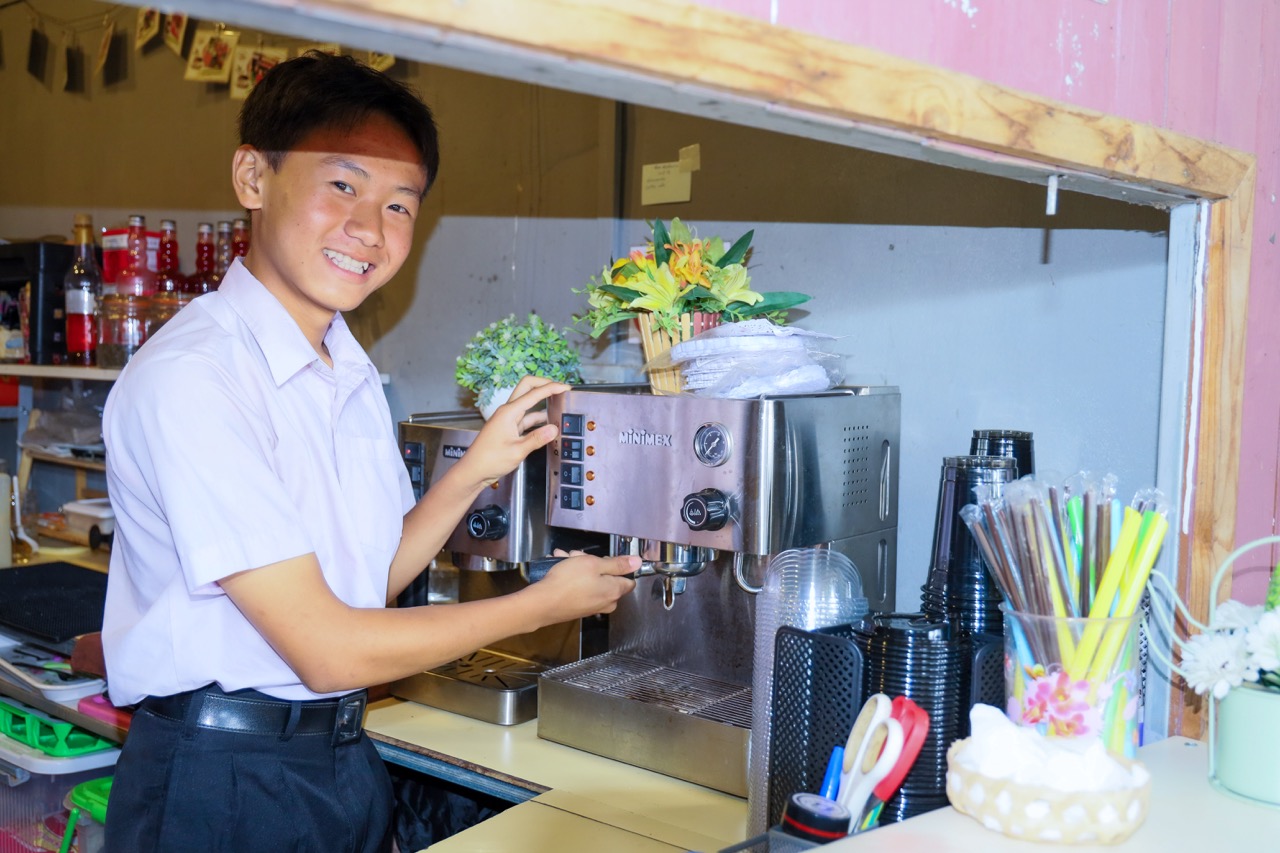
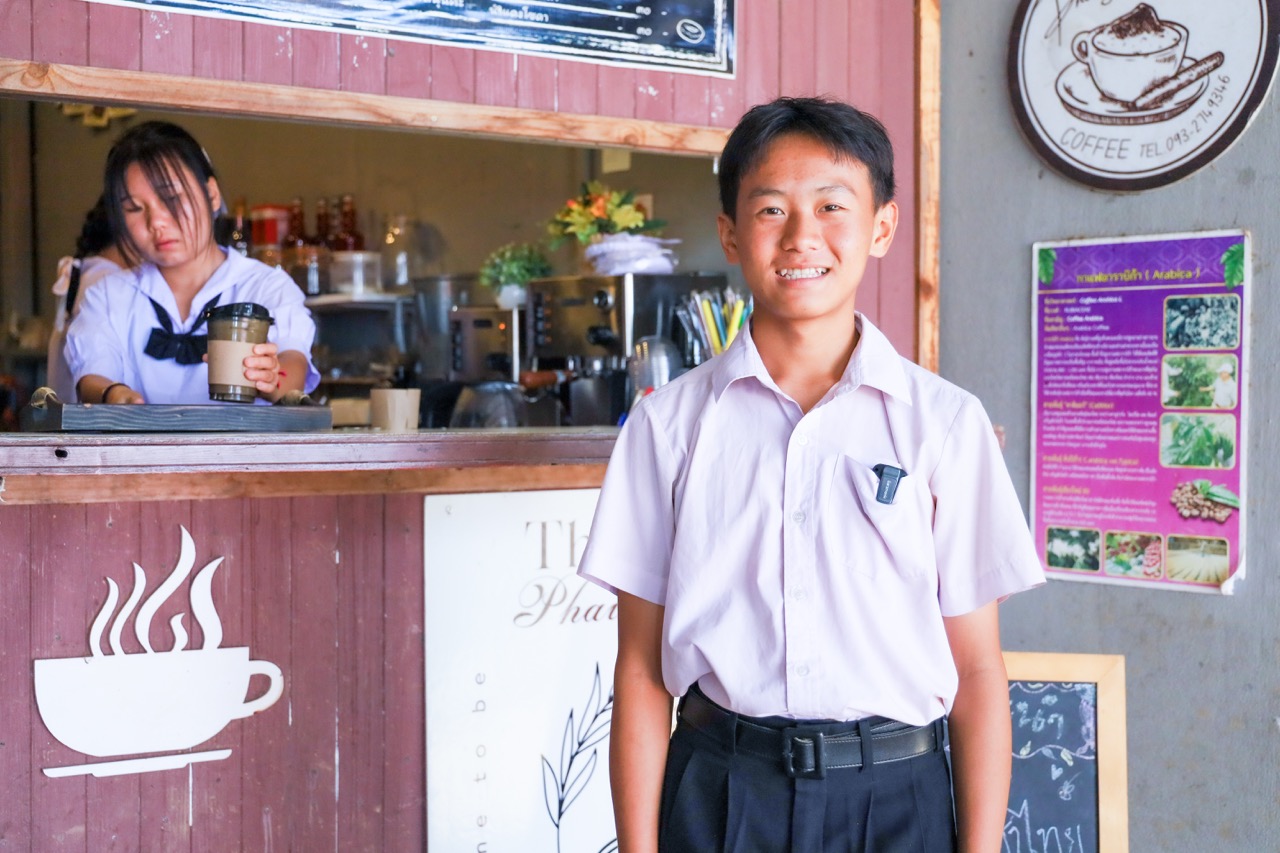
Thana, a seventh-grade student, is a member of the Phiangluang 16 Coffee learning center and one of the young people who have been given the opportunity to learn through hands-on experience.
At the café, 15 students in grades 4 through 9 learn how to make coffee and other beverages and manage day-to-day operations. Three youth leaders help oversee the café, which serves students, teachers, and school staff.
For Thana, the decision to join the program was motivated by more than an interest in coffee. It also stemmed from recognizing the potential of his own community.
“Coffee is already grown in our mountain community. I believe I can build on what I’ve learned about making coffee and managing the café to pursue a career and earn an income in the future.”
His perspective reflects learning rooted in the local community. The young participants do not see vocational skills as merely a school activity, but as an opportunity to build a better future for themselves, their families, and their community.
Every day during lunch, Nong Thana and his friends take turns practicing at the café. They learn everything from preparing ingredients and making beverages to serving customers and working together as a team.
“I’ve gained vocational skills in making coffee, tea, and other beverages that I can sell to earn an income.”
Through consistent practice, Nong Thana can now prepare a wide variety of beverages. His most popular menu item is a strawberry smoothie made with fresh milk.
When asked the secret behind its delicious taste, he smiled and simply replied:
“The secret is to put as much care as possible into making it.”
Although he is only 13 years old, Thana already has a clear goal for his future.
“I want to use what I’ve learned to open a coffee or beverage shop in my community, where people in the village can come to buy and enjoy drinks, while I earn an income in the future.”
Thana’s story shows that vocational skills development is about more than teaching young people how to do a job. It creates opportunities for them to discover their potential, learn to set goals, and dare to dream of a future they can build through their own knowledge, abilities, and determination.
Youth Development That Delivers More Than Income
The short-term vocational training program for young people is more than an income-generating activity within schools. It is an example of holistic youth development that brings together education, vocational skills, and economic opportunity.
The program’s impact is reflected not only in sales or the number of beverages sold, but also in young people’s growing confidence, willingness to express themselves, critical thinking and planning abilities, teamwork, and discovery of their own potential. Together, these outcomes represent valuable human capital for long-term social development.
In fiscal year 2025, World Vision Foundation of Thailand advanced its youth development mission by promoting life skills, leadership, child protection, and vocational skills for children and young people through development programs across Thailand. These efforts reached 36,187 children and young people, 17 parents and caregivers, and 1,519 partners and volunteers, benefiting a total of 37,723 people, including 26,519 vulnerable children.
These initiatives equip children and young people with essential life skills and leadership abilities, help them understand and protect themselves from a wide range of risks, and provide vocational skills development aligned with local contexts and labor market needs. This support prepares them to become self-reliant and achieve a better quality of life, while giving vulnerable children in particular opportunities to develop their full potential
Building the Future Through Youth Skills Development
In recognition of World Youth Skills Day on July 15, 2026, the stories of HBR Café and Phiangluang 16 Coffee demonstrate that investing in the skills of children and young people generates lasting benefits for society.
The success of these two learning spaces is the result of collaboration among young people, schools, communities, sponsors, donors, and World Vision Foundation of Thailand. Together, they have created a learning ecosystem where children and young people can discover their potential, develop essential skills, and move confidently toward the future.
Every seed of learning, when given the right opportunities and support, can grow into a powerful force for advancing communities, society, and the nation. Likewise, these two small cafés do more than serve beverages they are building brighter futures and inspiring hope for Thai youth every day.