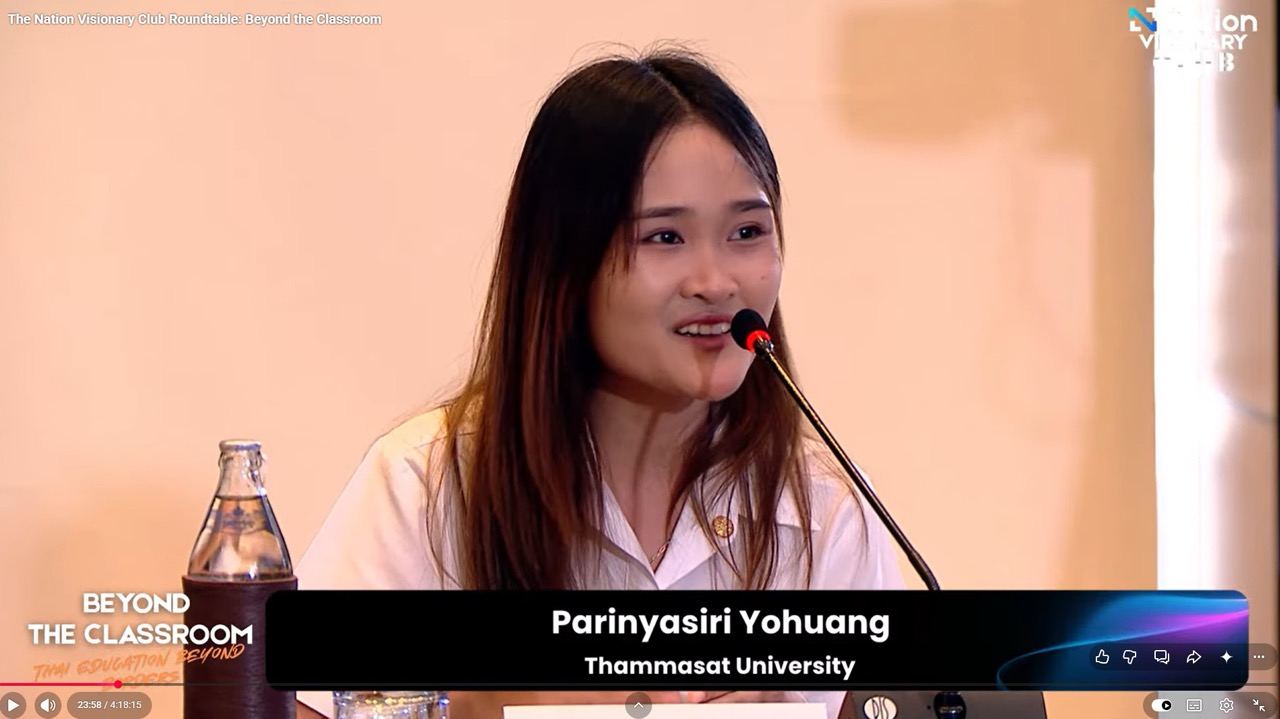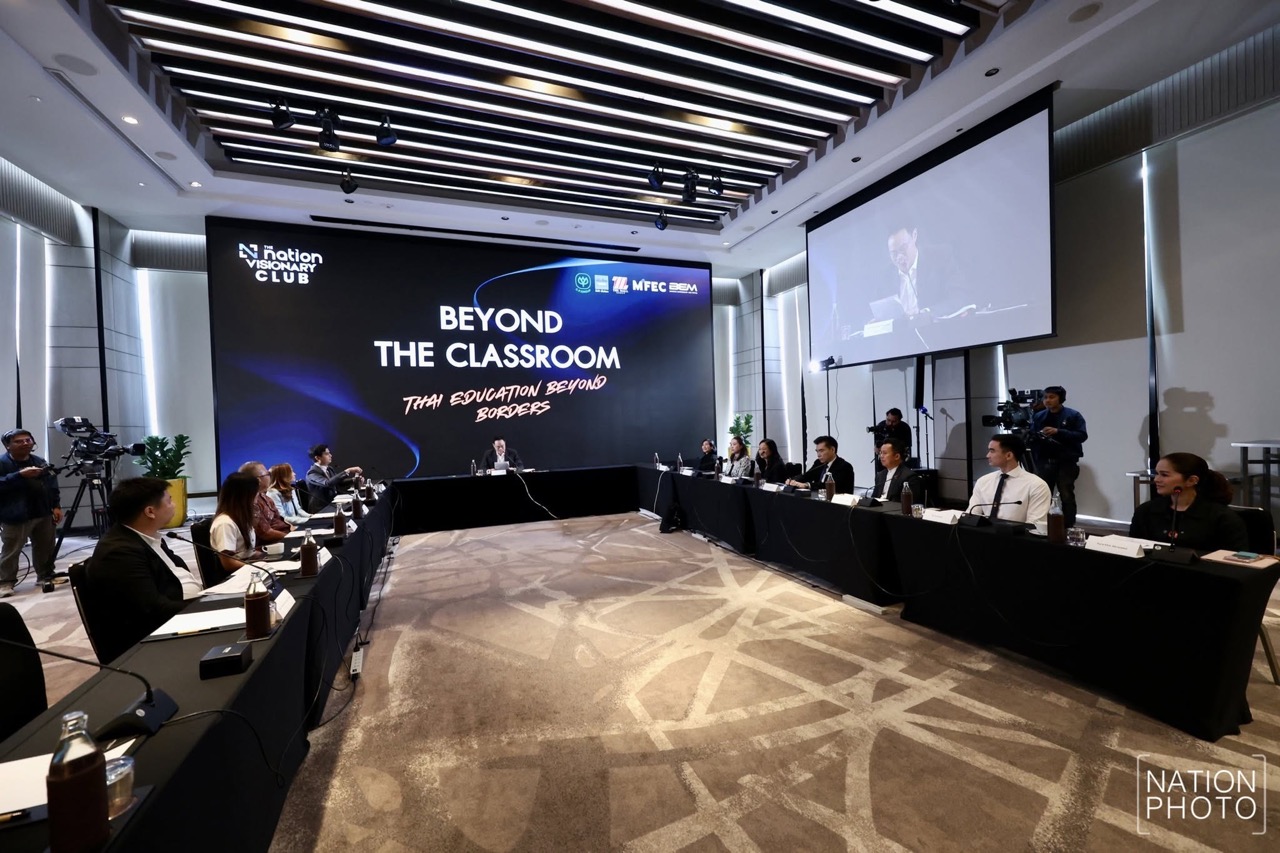
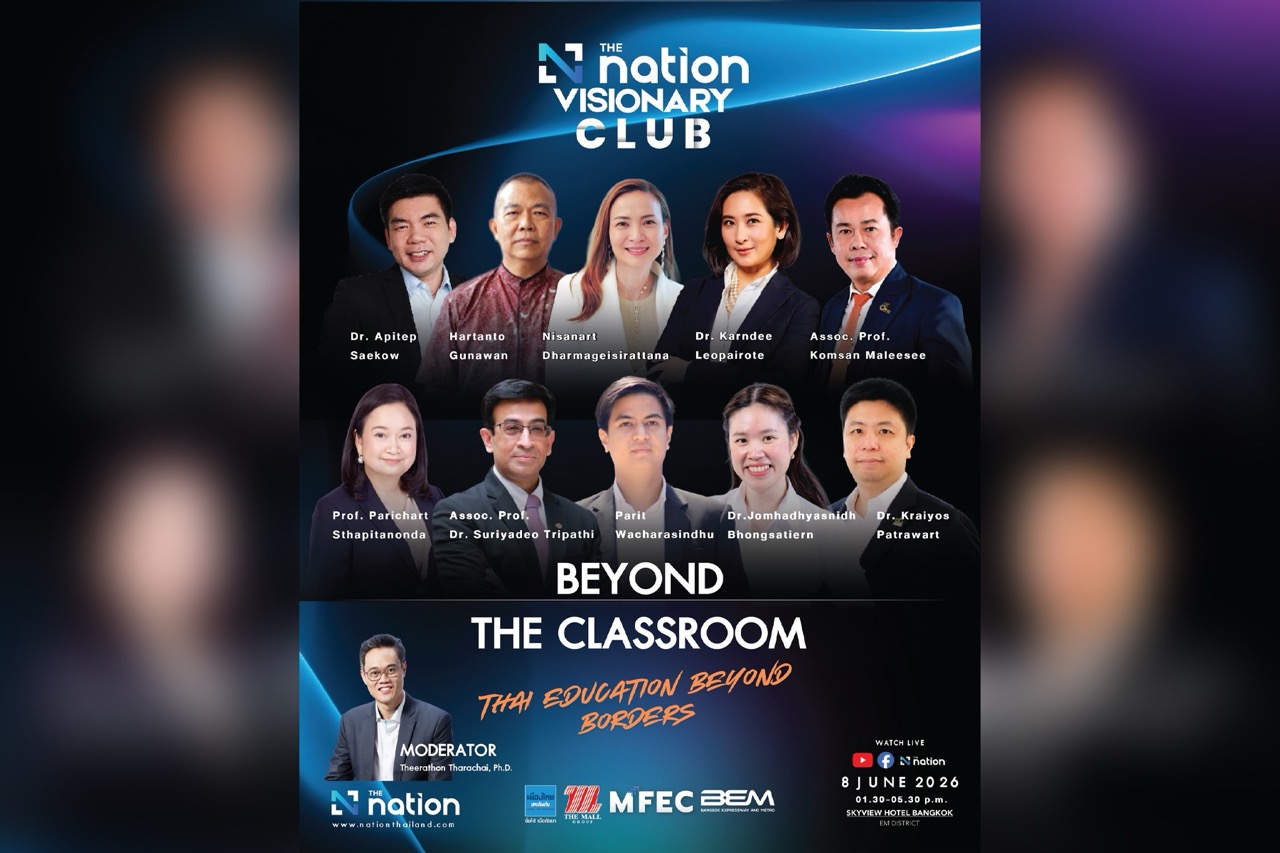
This was what made The Nation Visionary Club Roundtable: Beyond the Classroom – Thai Education Beyond Borders particularly important. Bringing together policymakers, academics and education leaders, the forum explored how Thailand can prepare its next generation for a rapidly changing world. Among the speakers was Ms. Parinyasiri Yohuang, a representative of marginalised students supported by World Vision Foundation of Thailand (WVFT) who is now studying in the Faculty of Nursing, Thammasat University.
Her participation represented more than personal success. It demonstrated what becomes possible when vulnerable children are given opportunities to learn, thrive and contribute to society. More importantly, it highlighted why young people should not only benefit from education policies but also help shape them.
The Challenge Thailand Faces
During the discussion, Dr. Kraiyos Patrawart, Managing Director of the Equitable Education Fund (EEF), highlighted a troubling reality: more than one million children and young people remain outside Thailand’s education system
Behind this figure are children affected by poverty, family hardship, migration status, disability and geographic isolation. For many, the challenge is not simply enrolling in school but remaining there long enough to complete their education and build a better future.
Educational inequality is no longer only a social issue. It is an economic issue. As ASEAN countries invest heavily in human capital and innovation, Thailand cannot afford to leave large numbers of children behind.
At the same time, the skills required for success are changing. Critical thinking, creativity, adaptability, collaboration and digital literacy have become as important as academic knowledge.
Learning Beyond the Classroom
One of the strongest themes emerging from the forum was that education must extend beyond traditional classroom walls.
Participants emphasised the importance of life skills, real-world experiences and community engagement in preparing young people for the future. Learning today must equip students not only to pass examinations but also to navigate complex social and economic challenges.
This shift aligns with growing recognition that education is about more than academic achievement. It is about helping young people become confident, capable and engaged citizens who can contribute positively to society.
Why Youth Voices Matter
The most powerful contribution to the discussion came from the young people themselves.
As a nursing student from a marginalised background, Parinyasiri brought lived experience to a conversation often dominated by experts and policymakers. Her story illustrates how access to education can transform lives and create opportunities that once seemed out of reach.
But her presence also highlighted a broader point: young people understand the challenges facing education better than anyone because they experience them every day.
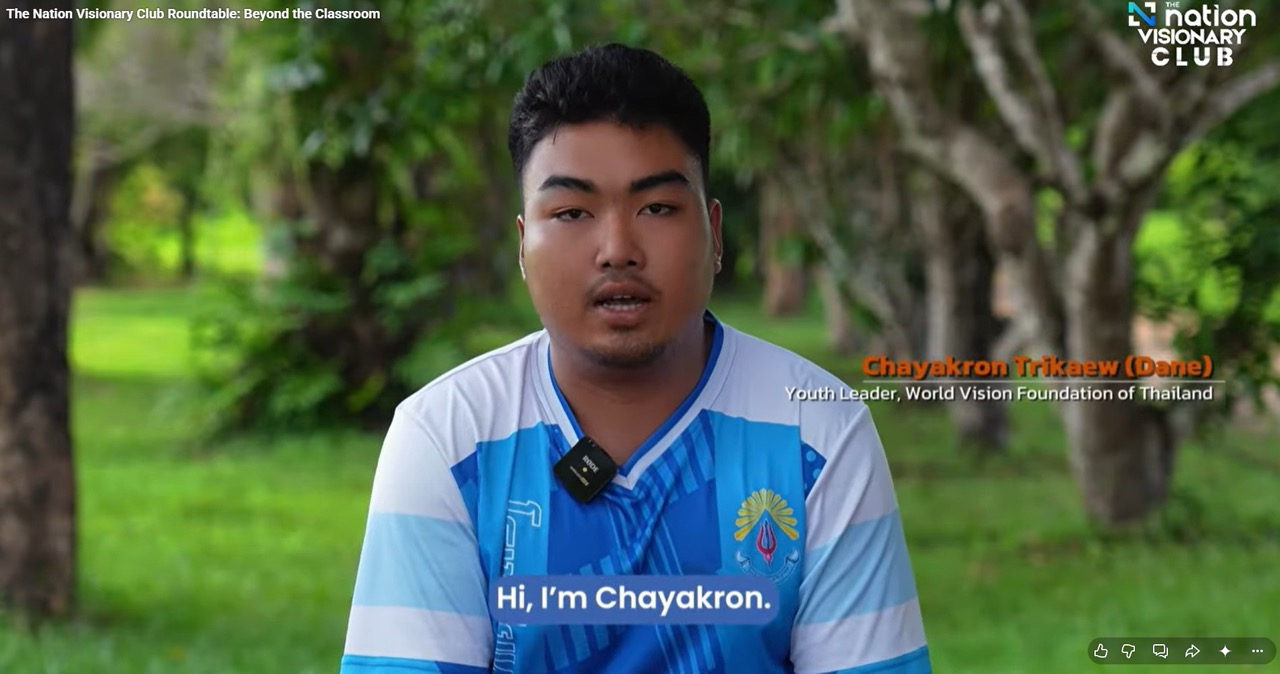
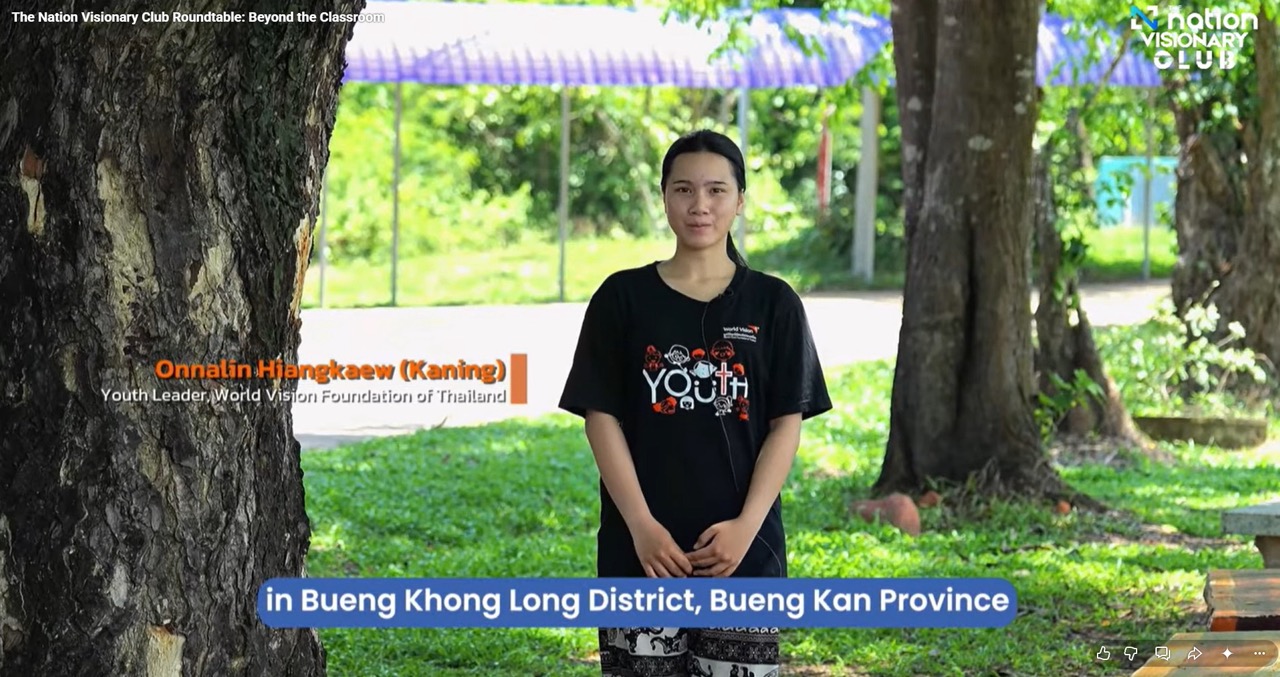
As part of the forum, youth leaders supported by World Vision Thailand posed questions directly to decision-makers:
- How can young people be supported when they must study and work at the same time?
- How can families cope with the financial burden of accessing quality education?
These questions reflect the realities faced by thousands of young people across Thailand. They also remind us that education policies are most effective when they are informed by those they are designed to serve.
From Access to Opportunity
Parit Wacharasindhu, the Parliamentarian, People’s Party Deputy Party Leader and Spokesperson and an dducation advocate, argued that reform must move beyond debates about curriculum and examinations toward a system that supports lifelong learning, flexible pathways and practical skills.
His perspective reflects an important truth: success in the future will depend not on memorisation, but on the ability to learn, adapt and solve problems throughout life.
However, these opportunities cannot be realised if large numbers of children remain excluded from quality education. Before Thailand can prepare young people for the future, it must ensure that every child has an equal chance to participate in it.
World Vision Foundation Thailand’s Commitment
At World Vision Foundation of Thailand (WVFT), youth participation is not symbolic—it is fundamental.
Across the country, WVFT works with children and young people from vulnerable and marginalised communities, including migrant and stateless populations, helping them develop leadership skills, confidence and opportunities to influence issues affecting their lives.
Through youth networks, leadership programmes and public engagement platforms, young people are encouraged to become active agents of change rather than passive recipients of support.
The participation of Parinyasiri and other youth representatives in this national dialogue demonstrates the value of creating spaces where young people can contribute their perspectives and help shape solutions.
A Future That Includes Every Child
Thailand’s future will depend not only on educational excellence but also on educational equity.
Talent exists in every community, but opportunities do not. When children are excluded because of poverty, geography, legal status or social circumstances, the country loses potential innovators, professionals, entrepreneurs and leaders.
Parinyasiri’s journey—from a marginalised student to a university nursing student and national panelist—shows what can happen when barriers are removed and opportunities are created.
For World Vision Foundation of Thailand (WVFT), this reflects our commitment to ensuring life in all its fullness for every child. Guided by our vision to Make Hope Real, we work every day to make hope real for children, families and communities across Thailand. We believe that every child deserves the opportunity to learn, thrive and realise their full potential.
When young people are empowered to participate, they do more than contribute to the conversation—they help shape solutions, influence decisions and lead change. Their voices bring valuable perspectives to the challenges facing education today and help create more relevant and effective solutions for the future.
As Thailand seeks to strengthen its competitiveness and prepare for an increasingly complex world, investing in young people must go beyond improving educational access alone. It also means creating opportunities for children and youth to participate meaningfully in shaping the policies and systems that affect their lives. This commitment aligns closely with Sustainable Development Goal 4 (SDG 4) on Quality Education, which calls for inclusive, equitable and quality learning opportunities for all.
Achieving this goal requires not only ensuring that children enter the education system, but also enabling them to stay, succeed and develop the knowledge, skills and confidence needed to thrive throughout their lives.
When every child is given an equal opportunity to succeed, we move closer to a Thailand that is more inclusive, prosperous and resilient. By listening to young people, investing in their potential and removing barriers to opportunity, we can Make Hope Real and build a future where all children can flourish and reach their full potential.