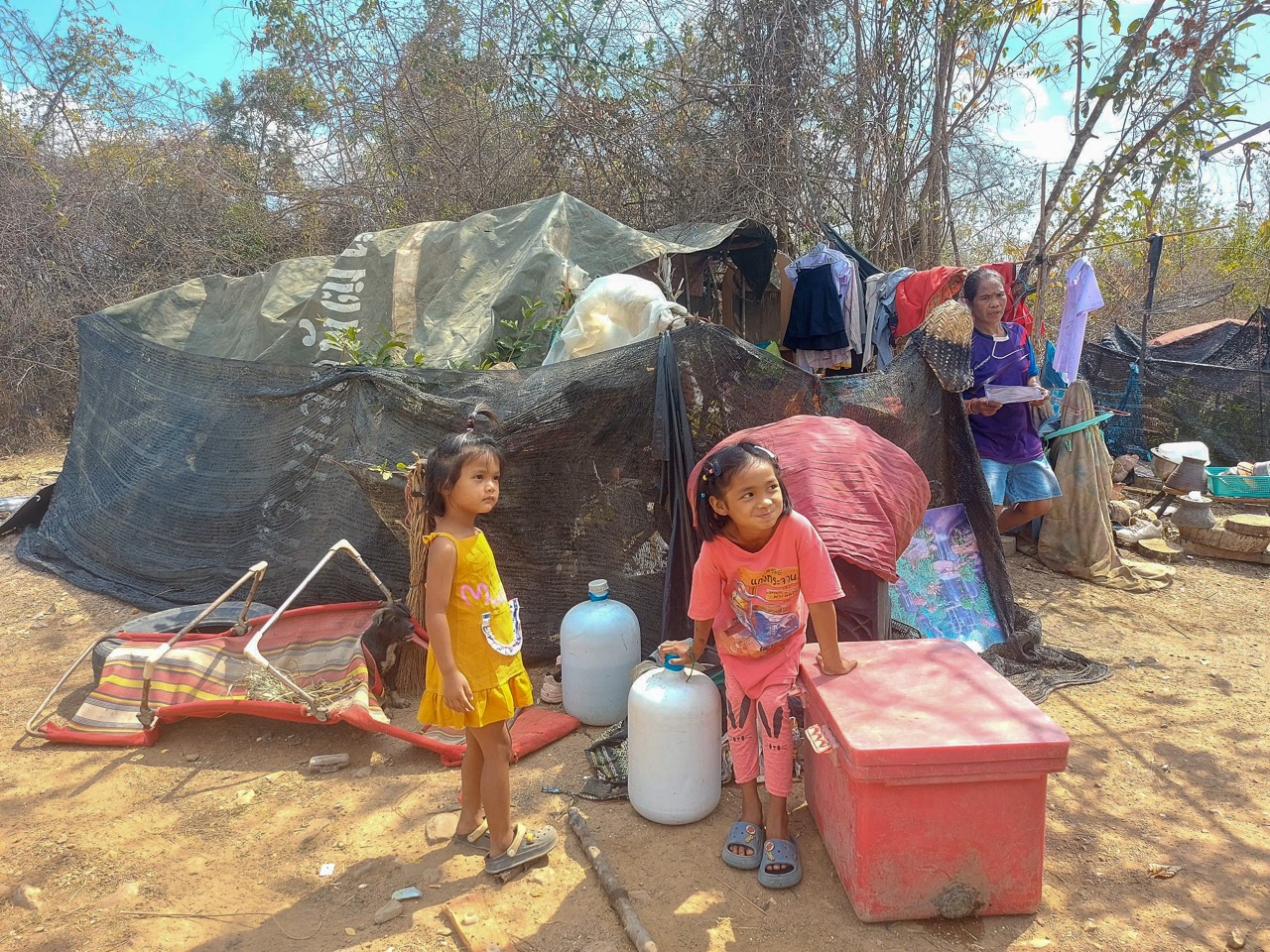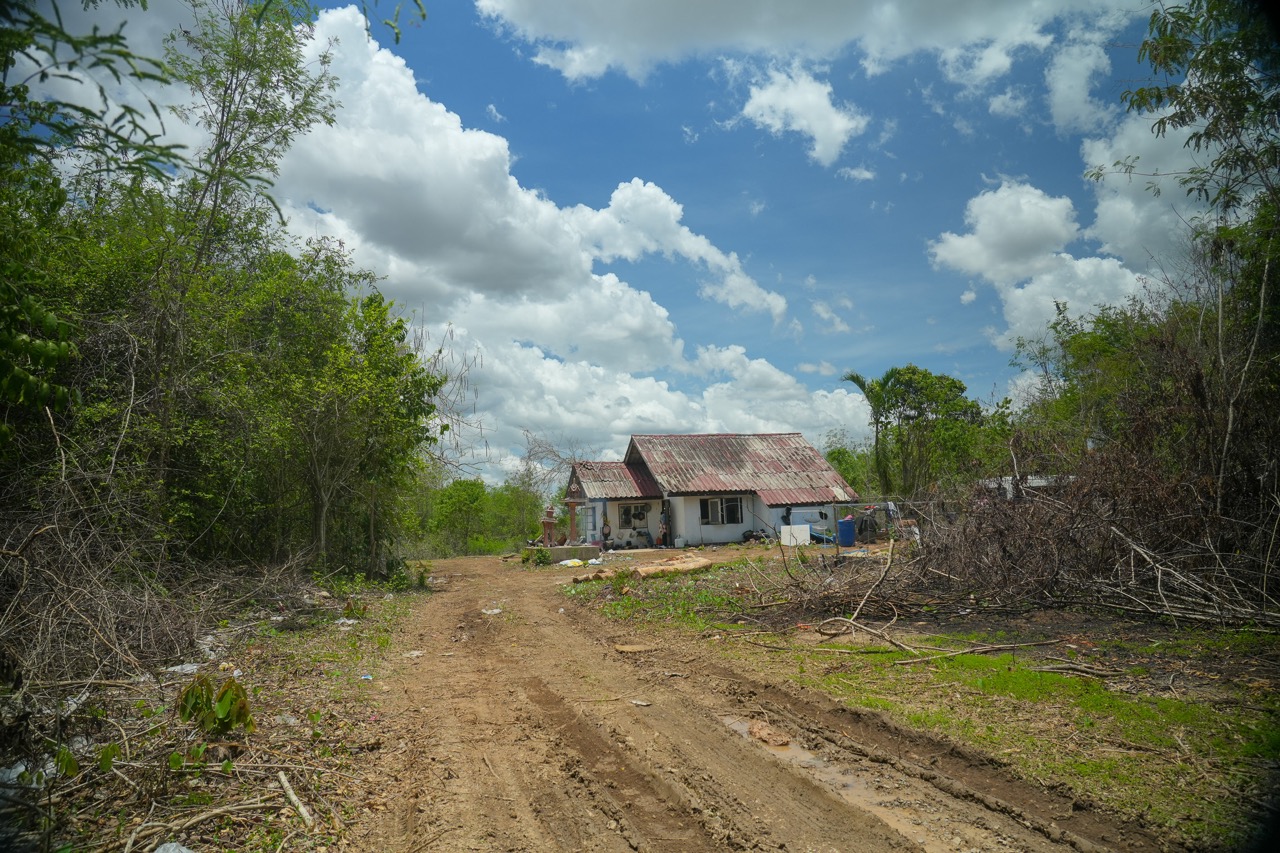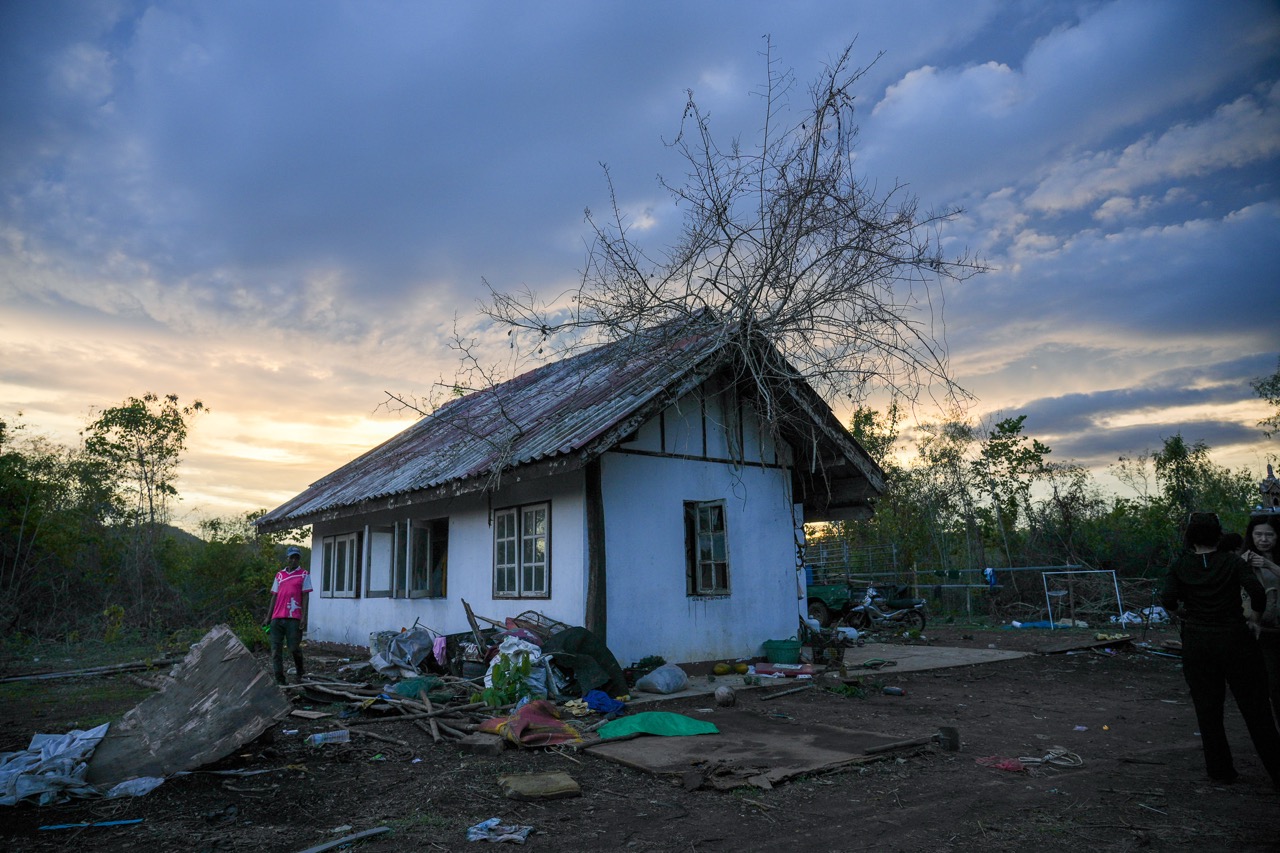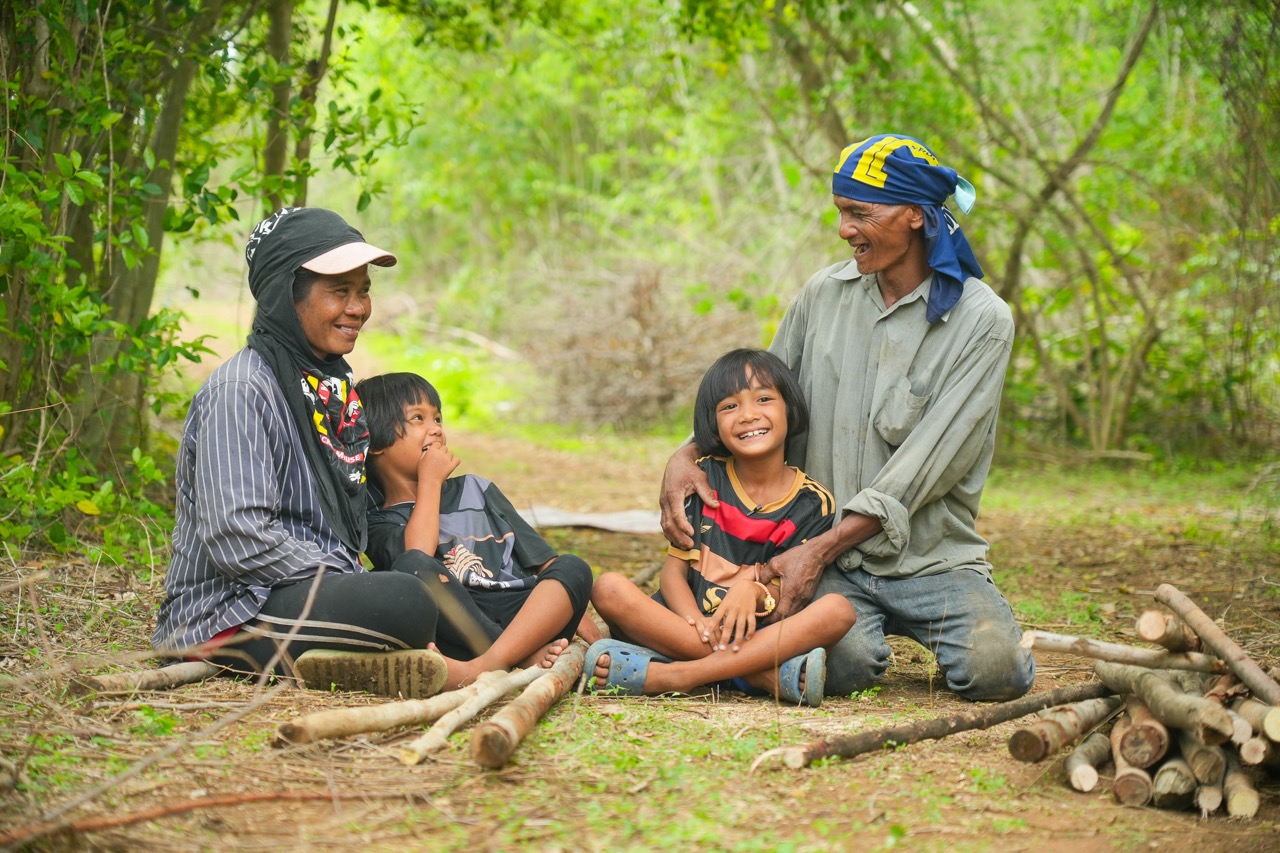
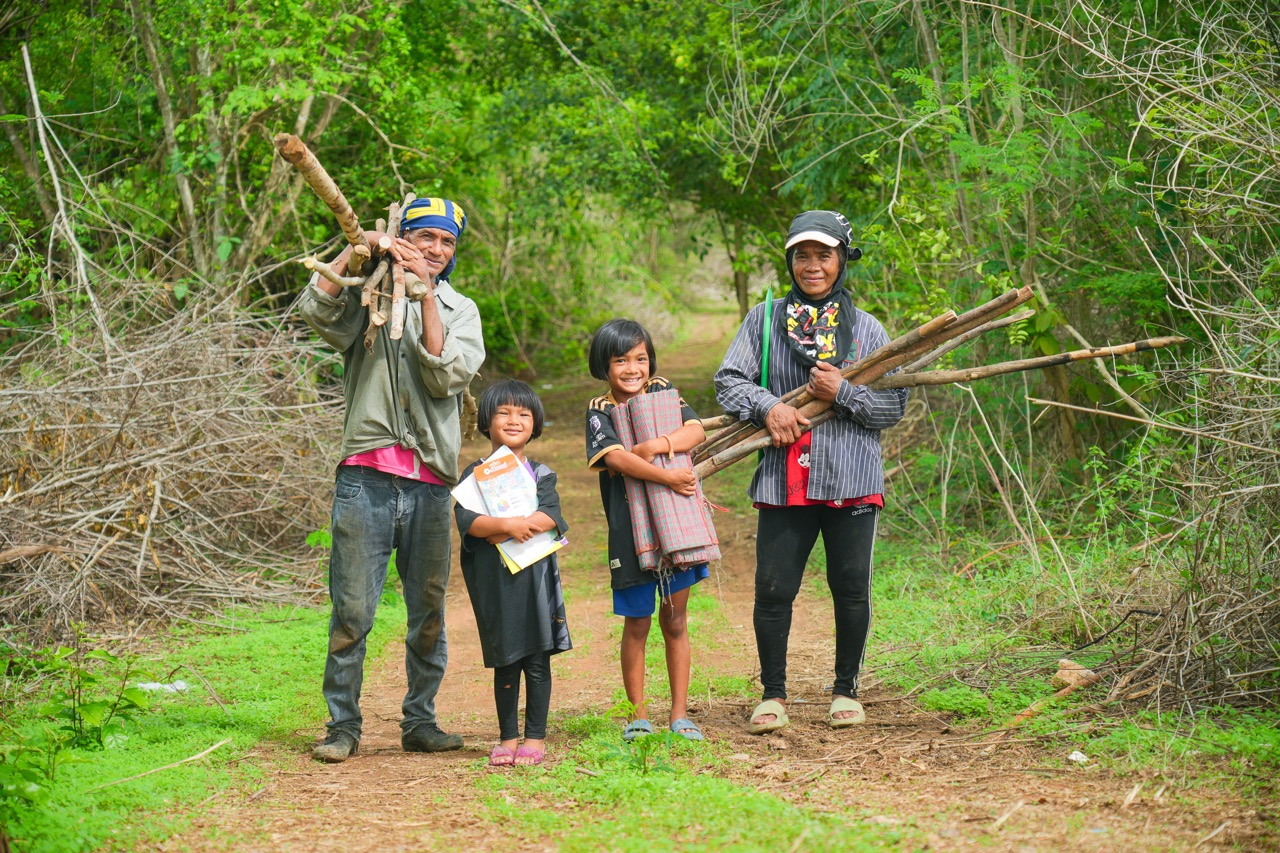
Amid dense brush and along a dirt path that crosses a canal, there stands a ‘makeshift dwelling’ known to almost no one. It is home to a family of four—a father, a mother, and their two daughters—who live without electricity, running water, or even the certainty that they will have enough to eat the next day.
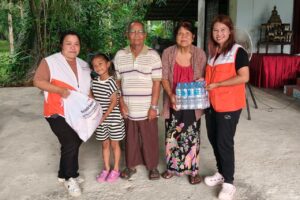
That began to change when staff from World Vision Foundation of Thailand visited the dwelling. “I feel proud and deeply moved. I never imagined anyone would come to help us like this,” said Sudjai, 56, the father of Fah and Noi. His voice trembled slightly as he sat inside the home, where natural light was the only source of illumination.
Sudjai is from Roi Et Province, while his wife, Yura, 43, is from Chaiyaphum Province. The couple moved to the Ratchaburi area in search of work. At first, they had only a makeshift shelter to sleep in. Their circumstances changed a few months ago when a local resident saw that they had nowhere to live and offered them a place to stay in an abandoned house in the middle of the forest. the house was overgrown and run-down, it at least had a roof that provided better protection from the sun and rain.
“At first, the area around the house was completely overgrown with grass and trees. I cut everything back and cleared the land until it was livable,” Sudjai recalled. His main work involves cutting timber, trimming branches, and climbing trees—dangerous work that offers neither a steady income nor social security coverage. On a good day, he may earn 400 baht, but he does not get work every day. He also sells some of the wood he cuts to supplement the family’s income; if he used all of it to make charcoal, they would not earn enough to meet their needs.
When the family has no income, they have no food. Their lifeline is a Buddhist ‘temple’ about 7 kilometers away. “I go to the temple for food almost every day. The senior monk sets some aside for us,” Sudjai said candidly and without embarrassment. For him, ensuring that his children have enough to eat matters more than anything else.
One of the greatest hardships of living there is the lack of electricity. The house once had electricity and running water, when its owner from Bangkok purchased the property to grow crops. But after more than 20 years of abandonment, all the equipment was removed, leaving only the aging structure as a reminder of what had once been there.
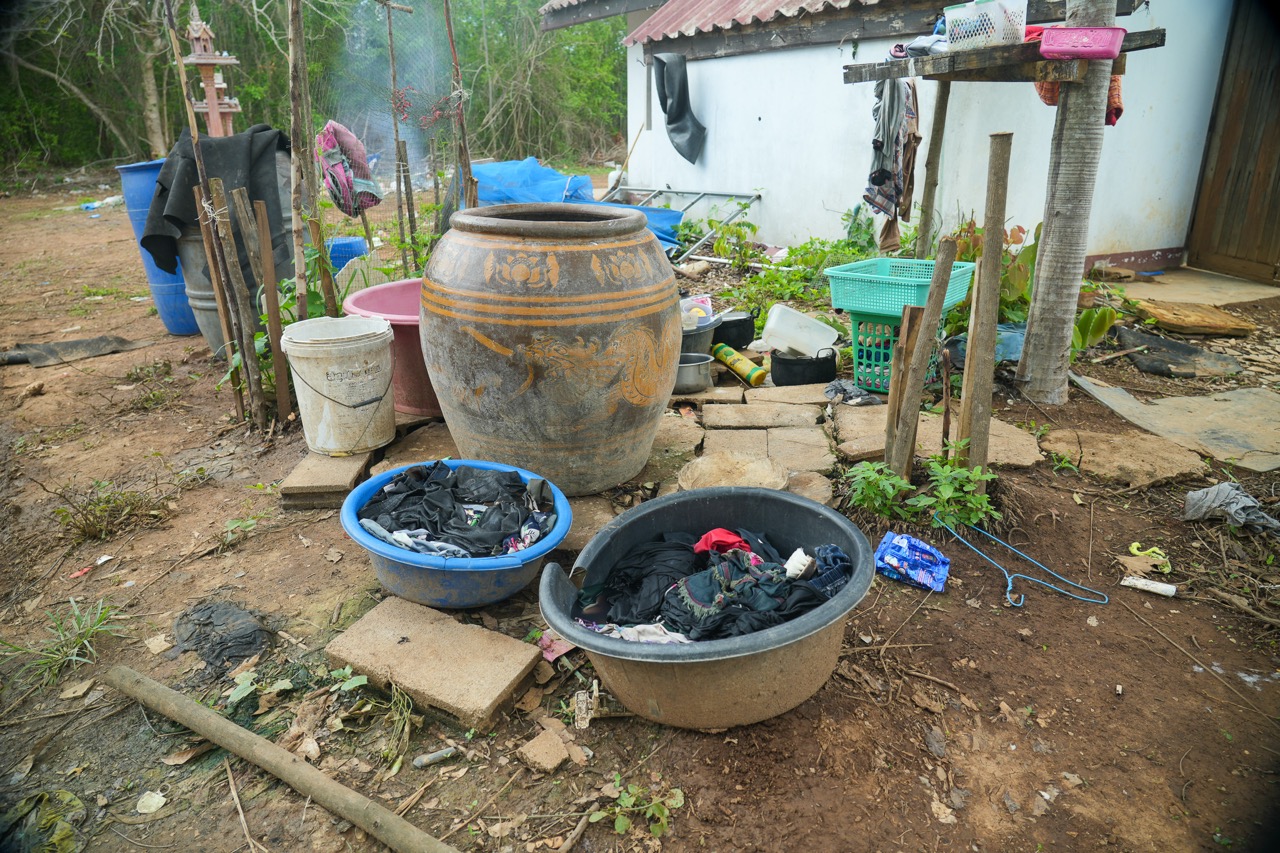
Today, the family relies on a battery that must be taken to the temple entrance for recharging every two or three days, at a cost of 50 to 100 baht each time. For household use, they have to wheel a 200-liter container of water in from outside, which lasts about two days. Drinking water costs an additional 15 baht per container.
“Having electricity would make many aspects of life easier. We would not have to ask others for water or depend on them as much as we do now,” Sudjai said calmly but hopefully. “Sometimes we use a lot of someone else’s electricity, and we feel bad about imposing. Even if they do not say anything, we can sense it.”
Sudjai said the family’s most urgent problem has a straightforward solution: a ‘power line’. Some of the original infrastructure remains, and the Subdistrict Administrative Organization is ready to coordinate with the Electricity Authority. All that is needed now is to run a cable from the main line to the house and cover the installation costs.
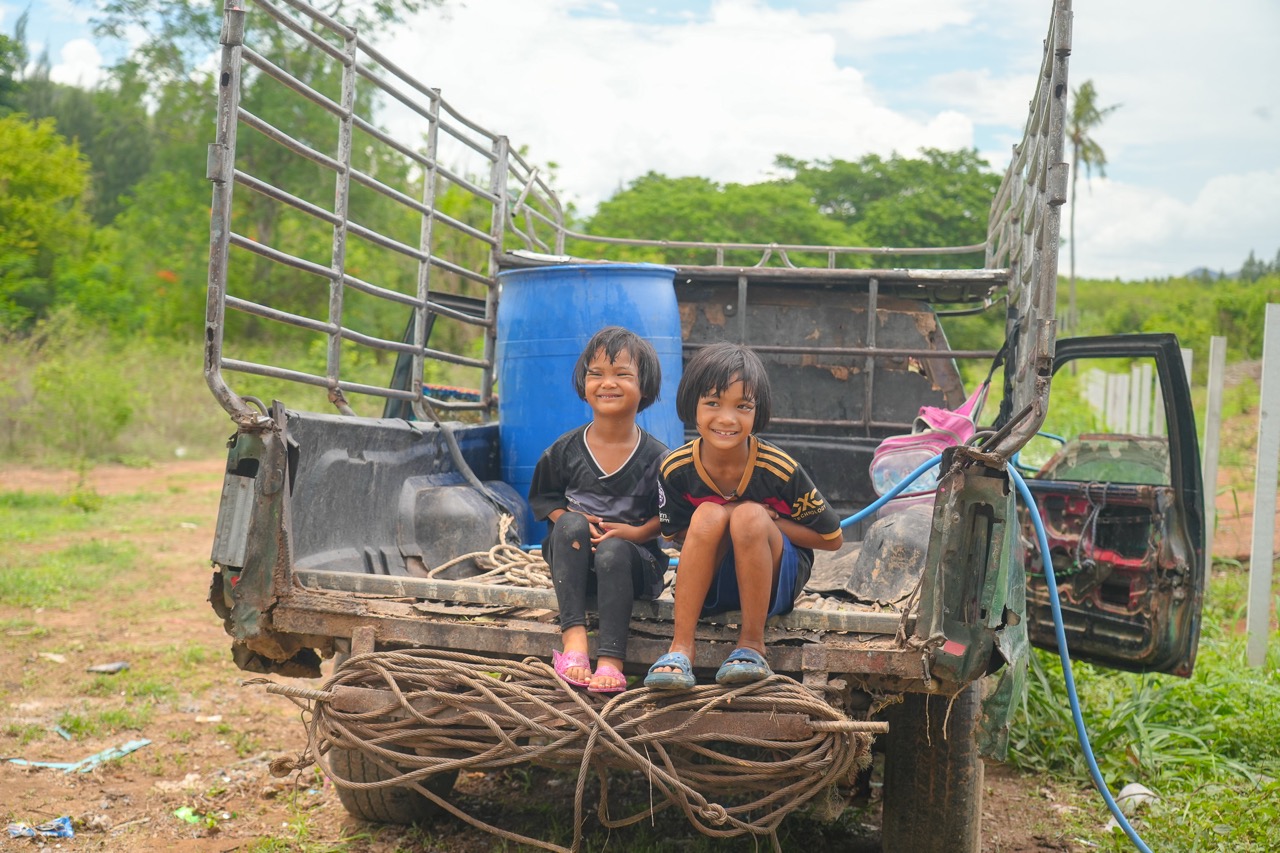
Although her nights are dark, the light in seven-year-old ‘Fah’s’ heart continues to shine brightly. The second grader smiles as she talks about her life—from her 30 classmates and kind homeroom teacher to her favorite school lunch, chicken rice.
She likes math, enjoys reading Thai, and loves to dance. She is also very clear about what she wants to be when she grows up. “I want to be a teacher. I will work hard and study as far as I can,” she said confidently.
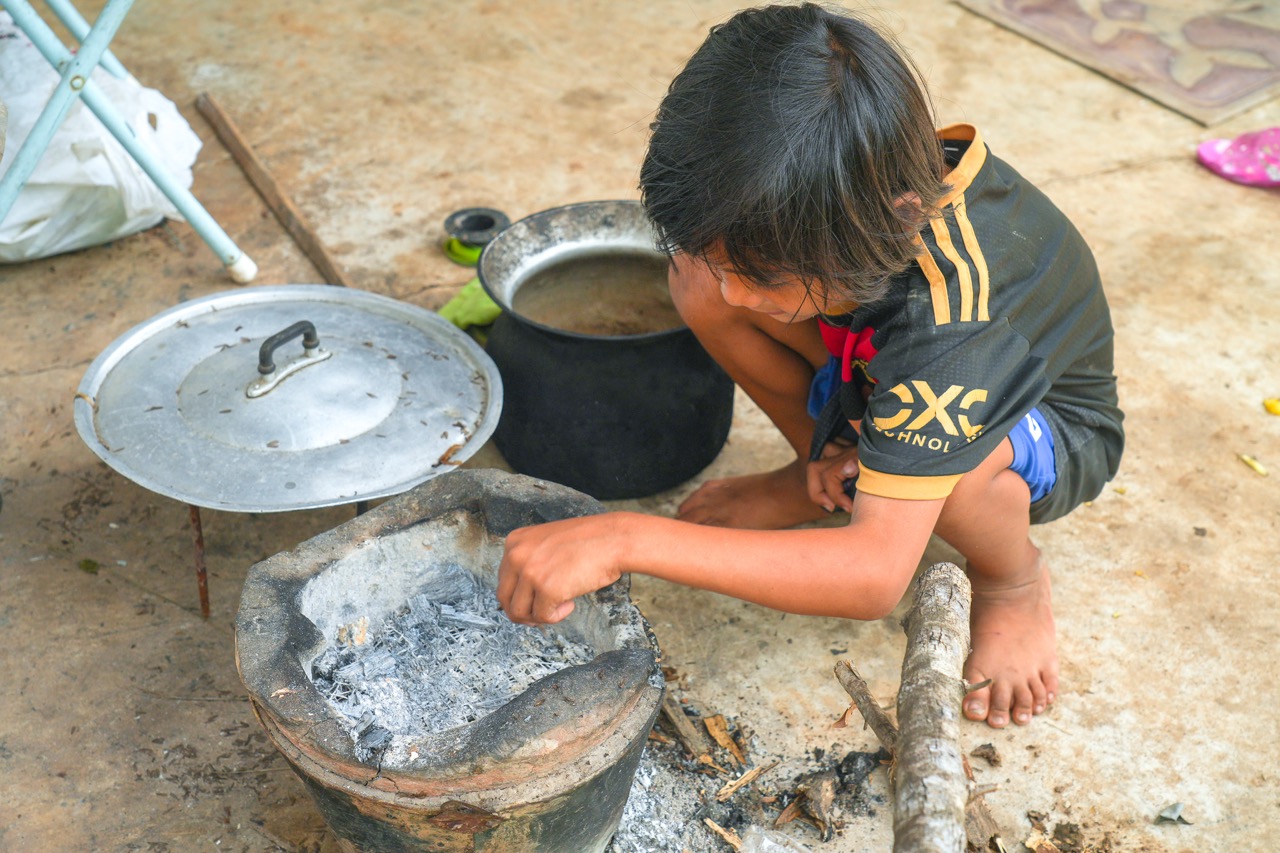
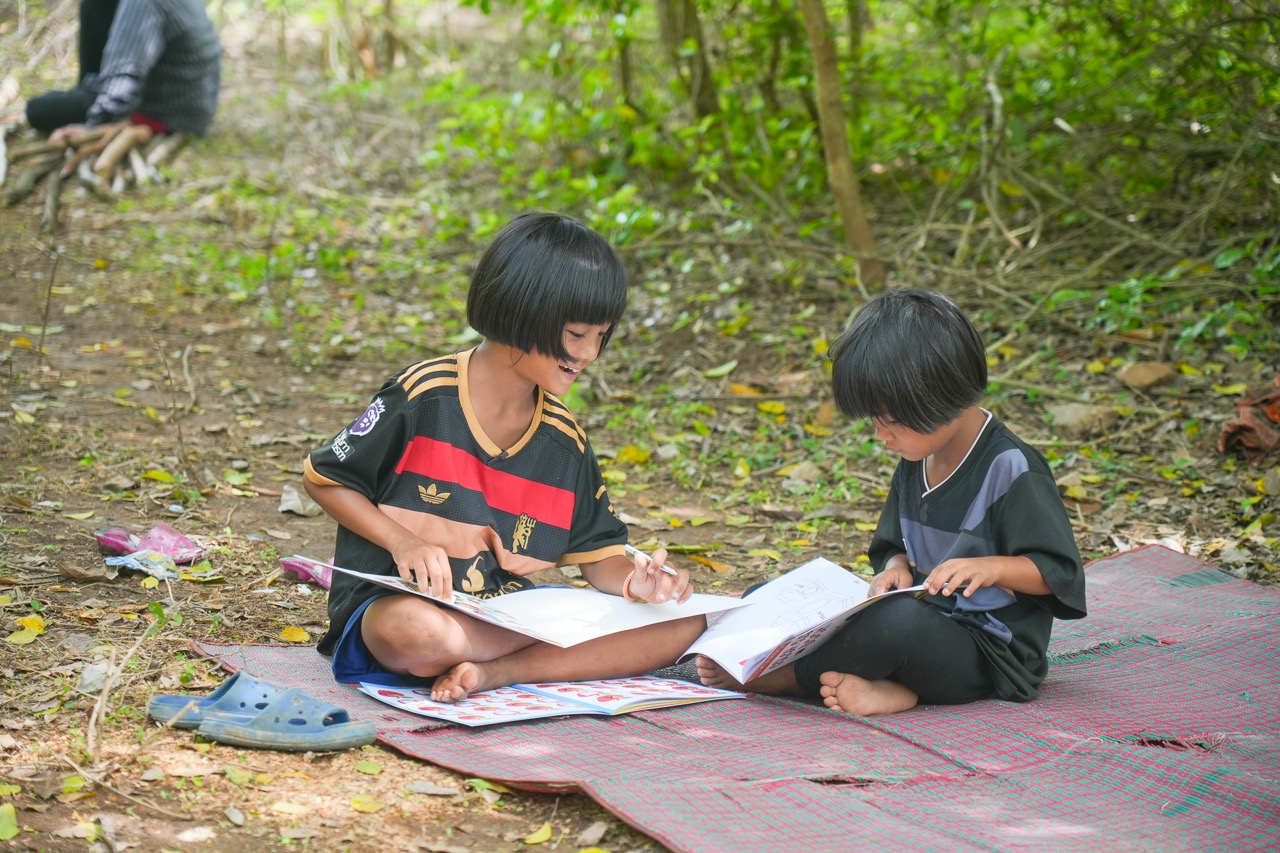
Yet behind that dream are challenges no seven-year-old should have to face. When asked about her home, she answered simply, “We don’t have electricity at home. I want electricity so I can do my homework at night.” After school, while daylight remains, Fah must wash the dishes, clean the house, and care for her younger sister, Noi. Nighttime is her only opportunity to read and complete her homework. By the faint glow of a battery-powered light, she also teaches her sister to draw. As soon as the light begins to fade, everyone must hurry to bed before it goes out completely.
“My daughter loves to read, but when night falls, I have to tell her to stop because we only have a battery-powered light,” Sudjai said, looking toward where his daughter was sitting.
Despite their hardships, the family has never lost hope. “I want my children to continue their education and have a good life and not have to struggle as their parents do,” he said. “Without an education, they will have no opportunities in the future.”
Their home may be deteriorating, and on some days they must rely on the temple for food. They must haul in their own water and recharge their battery every two or three days to power their light. Yet the family continues to smile and laugh, held together by a deep and enduring love.
The two girls’ bright smiles and sparkling eyes give their parents the strength and encouragement to overcome each new challenge.
Sudjai’s family is now waiting for arrangements to be made to connect their home to the electrical grid—the first step toward transforming their lives. With electricity, ‘Fah,’ whose name means ‘sky,’ and ‘Noi,’ whose name means ‘little one,’ will be able to read at night and move forward toward their dreams with dignity.